




What Is Retinoblastoma?
Retinoblastoma (RB) is the most common intraocular malignant tumor in children. Its pathogenesis is primarily triggered by biallic inactivation of the RB1 tumor suppressor gene; a small subset of RB cases with wild-type RB1 are driven by high-level amplification of the MYCN oncogene.
Retinoblastoma is divided into unilateral and bilateral clinical subtypes: unilateral cases account for 60%–70%, while bilateral cases make up 30%–40%. Bilateral tumors are usually hereditary and develop at an earlier age. RB accounts for 2%–4% of all pediatric malignancies, with a global neonatal incidence of approximately 1 in 16,000.
Pathogenesis
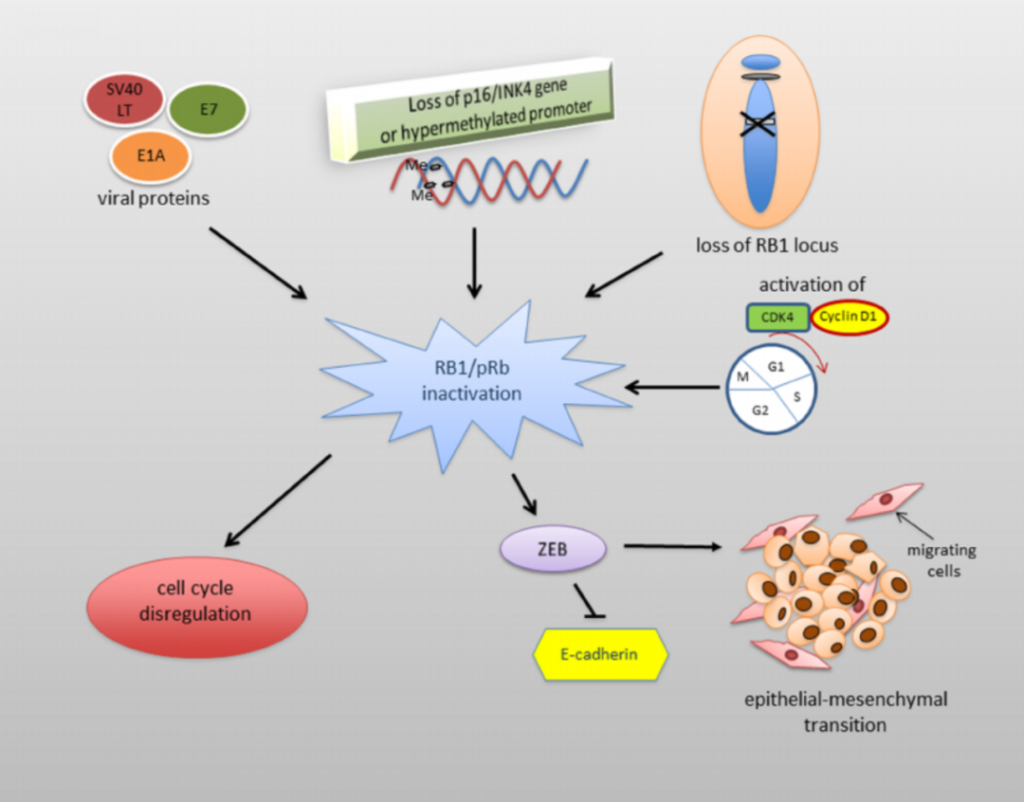
The core pathogenic driver of retinoblastoma is biallic loss-of-function mutations in the RB1 tumor suppressor gene. In hereditary RB patients, one mutated RB1 allele is inherited in the germline, and somatic inactivation of the second allele occurs during retinal development. Sporadic RB requires two independent somatic mutations within a single retinal cell.
The pRb protein encoded by RB1 serves as a master gatekeeper of the G1/S cell cycle checkpoint. It binds E2F transcription factors (mainly E2F1–E2F3) via its conserved pocket domain and recruits histone deacetylases and other chromatin-modifying complexes to form transcriptional repressors, silencing cell cycle-related genes. Loss of functional pRb leads to constitutive E2F activation, uncontrolled cell proliferation and the formation of premalignant retinal lesions.
Isolated RB1 inactivation mostly results in benign retinoma; malignant progression requires accumulation of additional genetic aberrations. MYCN amplification acts as a key cooperative oncogenic event, driving excessive cell proliferation while suppressing differentiation and apoptosis, and is strongly linked to tumor invasion and metastasis. Chromosomal instability causes aneuploid alterations including 1q gain, 6p gain and 16q loss, further disrupting intracellular gene expression homeostasis. High-grade tumors frequently harbor secondary lesions such as TP53 mutations (apoptosis evasion), PTEN deletion (PI3K/AKT pathway hyperactivation) and BCOR mutations (epigenetic dysregulation), which jointly boost cell survival, genomic instability and therapeutic resistance. Epigenetic abnormalities including hypermethylation of KDM6B also contribute to blocked cellular differentiation and malignant progression.
Preclinical Mouse Models for RB Research
- Rb1 Knockout Mice Complete ablation of murine Rb1. Homozygous embryos die mid-gestation due to severe defects in neural and hematopoietic development. This model is widely applied to investigate the essential embryonic functions of RB1 and validate its tumor-suppressive properties.
- MYCN Overexpression Mice Specific overexpression of the MYCN oncogene in retinal progenitor cells. This strain spontaneously develops retinoblastoma independent of RB1 mutations, making it an ideal tool to dissect MYCN-mediated oncogenic signaling networks and evaluate the efficacy of MYCN-targeted therapeutics.
- Conditional Rb Knockout Mice Cell-type and temporally controlled deletion of Rb1 restricted to retinal progenitor cells. This model enables precise spatiotemporal regulation of tumor initiation, and is utilized to trace the cell-of-origin of retinoblastoma and dissect early molecular events following RB1 loss.
VeloGene Biotechnology Accelerates Rare Tumor Gene Therapy R&D
Gene therapy delivers transformative therapeutic prospects for rare pediatric ocular tumors, yet preclinical mechanistic research and therapeutic efficacy validation fully rely on standardized, well-characterized animal models.
Powered by our proprietary TurboMice™ technology, VeloGene Biotechnology resolves two longstanding technical bottlenecks of traditional transgenic strain construction: prolonged breeding cycles and low success rates for complex multi-locus genetic modifications. The platform supports precise editing of nearly any target genomic locus and generates fully homozygous gene-edited mouse lines directly from embryonic stem cells in as little as 2 months.
VeloGene Biotechnology provides custom retinoblastoma mouse models including Rb1 knockout mice, MYCN overexpression mice and conditional Rb knockout mice. Academic and industrial investigators are welcome to contact our technical team for project consultations!