




What Is Paroxysmal Nocturnal Hemoglobinuria?
Paroxysmal Nocturnal Hemoglobinuria (PNH) is a rare acquired clonal disorder of hematopoietic stem cells. Its classic clinical triad consists of three core manifestations:
- Hemolytic Anemia: Predominantly chronic intravascular hemolysis, characterized by dark soy sauce-colored urine (hemoglobinuria upon waking in the morning).
- Bone Marrow Failure: Some patients develop concurrent aplastic anemia (AA) or myelodysplastic syndrome (MDS).
- Thrombosis: High incidence of venous thrombosis involving critical vessels including hepatic veins, mesenteric veins and cerebral vessels, which ranks among the leading causes of death in PNH patients.
Most PNH patients die from thrombosis or progressive cytopenia. The disease incidence ranges from 1 to 5 cases per million population.
Pathogenesis
The primary pathogenic defect of PNH arises from mutations in the PIG-A gene, located at Xp22.1 on the X chromosome. This gene encodes a subunit of N-acetylglucosaminyltransferase I, an enzyme essential for glycosylphosphatidylinositol (GPI) biosynthesis.
GPI anchors a panel of membrane proteins on blood cells, including decay-accelerating factor (CD55) and glycoprotein CD59. Loss of these proteins renders PNH red blood cells highly susceptible to intravascular hemolysis, triggering hemolytic episodes and thrombosis.
Over one hundred distinct PIG-A variants have been documented; most are single-base substitutions, while long insertions or deletions are rare, and no prominent mutational hotspots have been identified to date.
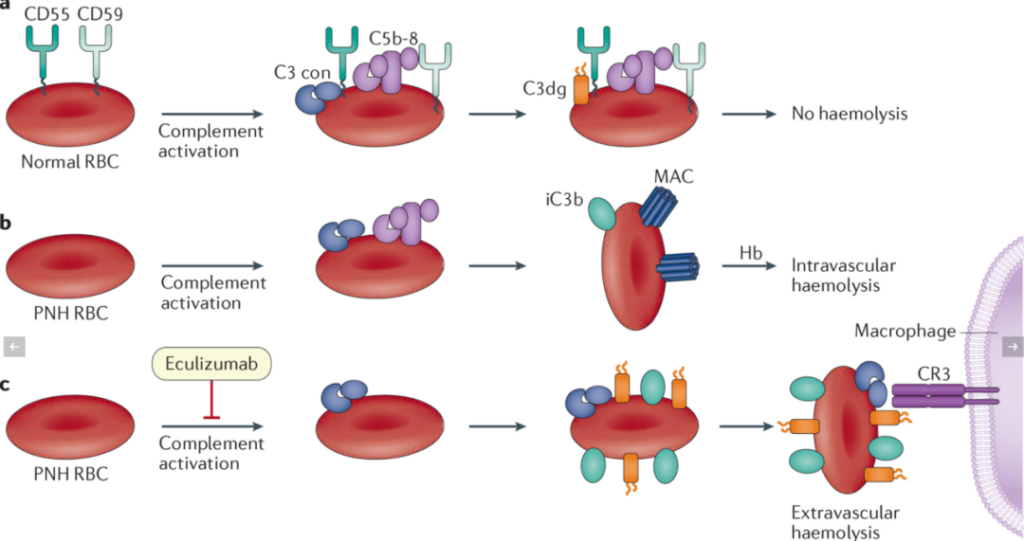
Isolated PIG-A mutation alone cannot drive clonal expansion of PNH cells. Full disease pathogenesis additionally involves immune evasion, clonal selection and secondary gene mutations:
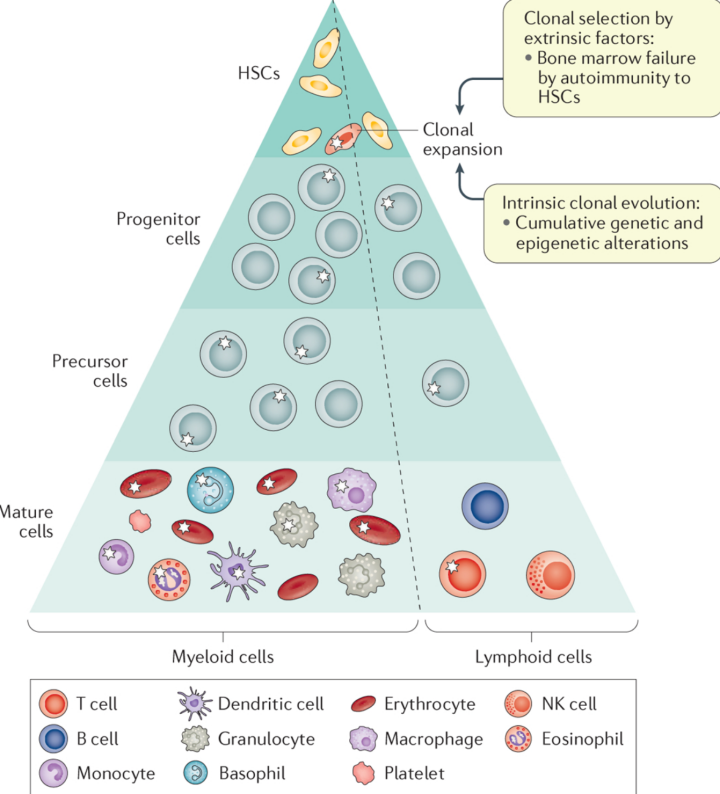
- PNH clones lack GPI-anchored surface proteins, enabling them to evade immune surveillance and gain a proliferative advantage.
- Expansion of PNH clones is driven by immune selective pressure within the bone marrow microenvironment, which typically arises from bone marrow failure or other myeloproliferative neoplasms.
- Secondary somatic mutations such as JAK2 and CALR may emerge in PNH clones to further accelerate clonal outgrowth and disease progression.
Gene Therapy Research
1. PIG-A Gene Replacement Therapy
Lentiviral vectors are utilized to deliver functional wild-type PIG-A into patient hematopoietic stem cells, restoring physiological expression of GPI-anchored membrane proteins. Moreau-Gaudry et al. successfully achieved stable PIG-A transduction in mouse models, and selectively expanded corrected stem cells via drug screening systems.
2. Complement-Targeted Gene Therapy
HMI-104, an AAV-based gene therapy encoding anti-C5 antibody, drives hepatic secretion of anti-C5 immunoglobulin to suppress systemic complement activation. Preclinical animal studies confirmed complete inhibition of ex vivo hemolysis.
PNH Mouse Model: Conditional PIG-A Knockout Mice
Vav-Cre or Mx1-Cre recombinase systems are applied to selectively ablate Pig-a within the hematopoietic compartment, recapitulating the GPI-deficient phenotype observed in human PNH patients. These mice display GPI-negative hematopoietic populations, mild hemolysis and a predisposition to bone marrow failure.
VeloGene Biotechnology Accelerates Rare Disease Gene Therapy R&D
Gene therapy delivers promising therapeutic prospects for rare diseases, yet preclinical development and efficacy validation are heavily dependent on standardized animal models.
Leveraging our proprietary TurboMice™ technology, VeloGene Biotechnology has generated a comprehensive portfolio of rare disease gene-edited mouse models. TurboMice™ overcomes two long-standing technical bottlenecks of traditional model construction: lengthy breeding cycles and low success rates for complex genetically modified strains. The platform supports precise editing of nearly any target genomic locus and generates fully homozygous gene-edited mouse lines directly from embryonic stem cells in as little as 2 months.
VeloGene Biotechnology provides custom conditional Pig-a knockout mice tailored to PNH research requirements. Academic and industrial researchers are welcome to submit project inquiries to our technical team!
References
[1] Li LY, Fu R. Pathogenesis of paroxysmal nocturnal hemoglobinuria. Chin J Hematol. 2018, 39(6): 527-528. DOI: 10.3760/cma.j.issn.0253-2727.2018.06.022
[2] Hill A, DeZern AE, Kinoshita T, Brodsky RA. Paroxysmal nocturnal haemoglobinuria. Nat Rev Dis Primers. 2017;3:17028. DOI: 10.1038/nrdp.2017.28. PMID: 28516949; PMCID: PMC7879566
[3] Luzzatto L, Nakao S. Pathogenesis of paroxysmal nocturnal hemoglobinuria. Blood. 2025;145(26):3077-3088. DOI: 10.1182/blood.2024025975. PMID: 40089995
[4] Perry C, Von Buttlar X, Thota S. The Advancing Landscape of Paroxysmal Nocturnal Hemoglobinuria Treatment. Turk J Haematol. 2025;42(2):74-81. DOI: 10.4274/tjh.galenos.2025.2025.0054. Epub 2025 Apr 21. PMID: 40257298; PMCID: PMC12099479