




What Is Neuroblastoma?
Neuroblastoma (NB) is the most common extracranial solid tumor in children, accounting for 8%–10% of all pediatric malignancies, and is known as the “king of childhood tumors” due to its highly heterogeneous clinical manifestations.
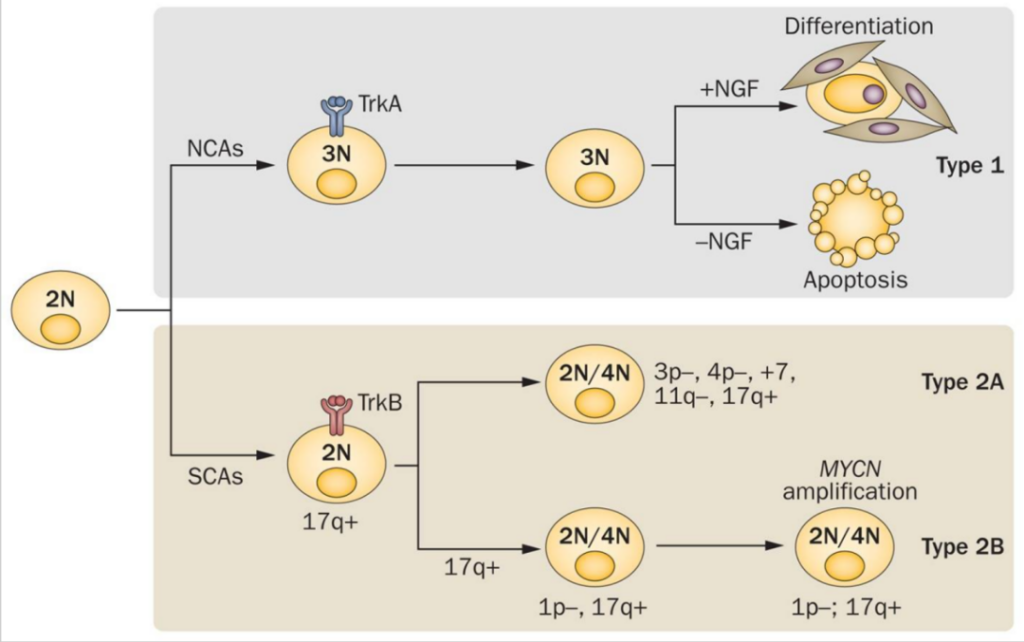
Based on molecular signatures, neuroblastoma is divided into three prognostic subgroups:
- Favorable Subtype 1: Usually triploid karyotype with spontaneous tumor regression tendency;
- Intermediate-risk Subtype 2A: Characterized by segmental chromosomal aberrations;
- High-risk Subtype 2B: Defined by MYCN gene amplification, featuring highly invasive growth and frequent bone/bone marrow metastasis.
Approximately 1%–2% of cases are familial. Pathogenic variants in ALK and PHOX2B account for about 80% of all hereditary cases, among activating ALK mutations are the primary genetic drivers.
Pathogenesis
The core driver of neuroblastoma is blocked differentiation of neural crest-derived progenitor cells.
Genomic level drivers for high-risk Subtype 2B:
- MYCN amplification dysregulates cell cycle and apoptotic pathways to strongly fuel tumor progression;
- Activating ALK mutations (e.g., R1275Q) act as independent or cooperating oncogenic events, persistently activating PI3K/AKT and MAPK pro-survival cascades;
- Loss of heterozygosity on chromosomes 1p and 11q may eliminate key tumor suppressor genes.
Epigenetic dysregulation including aberrant DNA methylation and histone remodeling alters chromatin conformation, silencing neuronal differentiation genes and locking cells in an undifferentiated state. In addition, tumor cells recruit immunosuppressive cells such as TAMs and MDSCs to form an immune-suppressive microenvironment, and secrete VEGF to promote angiogenesis, jointly sustaining malignant phenotypes.
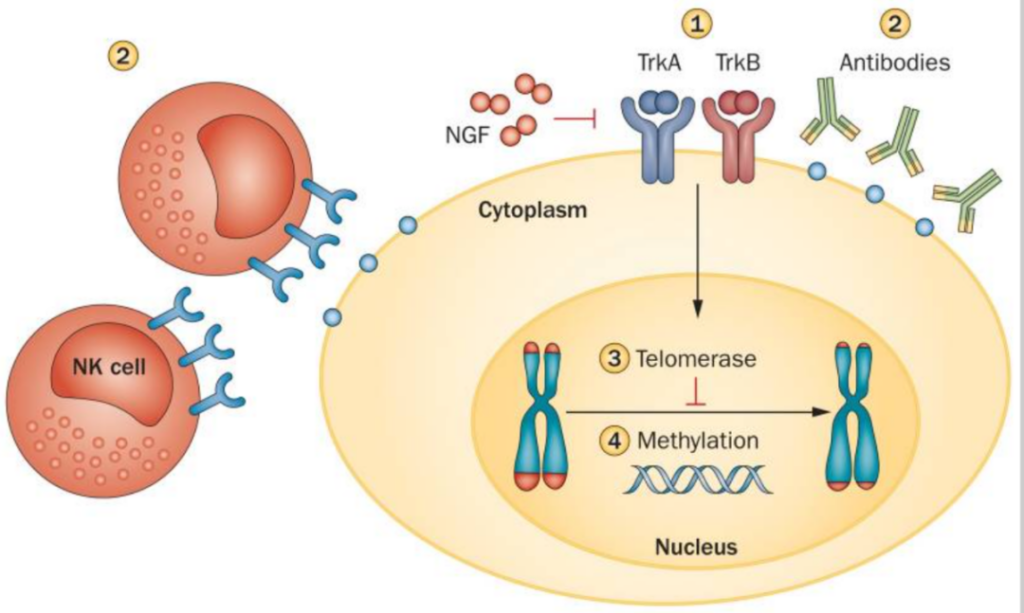
Spontaneous regression is the most distinctive biological feature of neuroblastoma, referring to spontaneous shrinkage or complete disappearance of primary tumors in infant patients without targeted or only minimal supportive treatment. This active biological process is controlled by multiple coordinated molecular pathways:
- Neurotrophic factor deprivation-induced apoptosis (TrkA signaling balance) When tumor cells with high TrkA expression reside in NGF-rich primary lesions, NGF-TrkA signaling sustains cell survival and differentiation. After metastasis to NGF-deficient organs such as liver and skin, unbound TrkA acts as a dependence receptor to trigger caspase cascades and mitochondrial-mediated apoptosis.
- Immune-mediated clearance Patients produce anti-GD2 IgG antibodies that eliminate tumor cells via ADCC and CDC pathways. NK cells recognize tumor stress antigens through NKG2D receptors and release perforin/granzyme to directly lyse tumor cells.
- Replicative senescence driven by telomere dysfunction Low-risk neuroblastoma typically exhibits absent or low telomerase activity. Telomeres shorten progressively with cell division; upon reaching the critical Hayflick limit, DNA damage response pathways activate the p53-p21/Rb axis, inducing irreversible cell cycle arrest followed by senescence or programmed cell death, restraining unlimited tumor proliferation.
- Epigenetic reprogramming Regressing tumors display genome-wide hypomethylation alongside hypermethylation at specific tumor suppressor promoters. Altered histone-modifying enzymes reshape chromatin landscapes, reactivating neural crest developmental transcription factors, relieving suppression of differentiation and apoptotic programs, and priming tumor cells for differentiation or cell death under microenvironmental cues.
Gene Therapy Strategies
1. MYCN-Targeted Gene Silencing
Lentivirus, AAV or lipid nanoparticle (LNP) delivery systems carry shRNA or gene-editing constructs targeting MYCN. Specific degradation of MYCN mRNA or editing of its promoter represses MYCN protein expression and blocks downstream oncogenic signaling, suitable for MYCN-amplified high-risk neuroblastoma.
2. ALK Gene Correction Therapy
Homology-directed repair or AAV-delivered dominant-negative mutants are applied to correct oncogenic activating variants (F1178S, R1275Q) or competitively suppress aberrant ALK kinase activity.
Preclinical Mouse Models for Neuroblastoma Research
- Dbh-ALK F1178S Mice Carry the ALK F1178S activating mutation. Embryonic sympathetic ganglia hyperplasia and neuronal developmental defects are observed; widely used for in vivo efficacy testing of ALK-targeted drugs and dissecting ALK oncogenic signaling in neuroblastoma initiation and progression.
- TH-MYCN Mice The tyrosine hydroxylase (TH) promoter drives specific overexpression of the MYCN oncogene. Mice spontaneously develop abdominal sympathetic ganglia tumors within weeks after birth, serving as the gold-standard preclinical model for studying MYCN-amplified neuroblastoma and evaluating novel therapeutics.
VeloGene Biotechnology Accelerates Rare Tumor Gene Therapy R&D
Gene therapy brings promising therapeutic prospects for rare pediatric tumors, yet preclinical mechanism research and therapeutic efficacy validation fully rely on standardized, well-characterized animal models.
Powered by our proprietary TurboMice™ technology, VeloGene Biotechnology resolves two longstanding technical bottlenecks of traditional transgenic strain construction: prolonged breeding cycles and low success rates for complex multi-locus genetic modifications. The platform supports precise editing of nearly any target genomic locus and generates fully homozygous gene-edited mouse lines in as little as two months directly from embryonic stem cells.
VeloGene Biotechnology provides custom neuroblastoma mouse models including Dbh-ALK F1178S mice and TH-MYCN mice. Academic and industrial investigators are welcome to contact our technical team for project consultations!