




What Is Methylmalonic Acidemia?
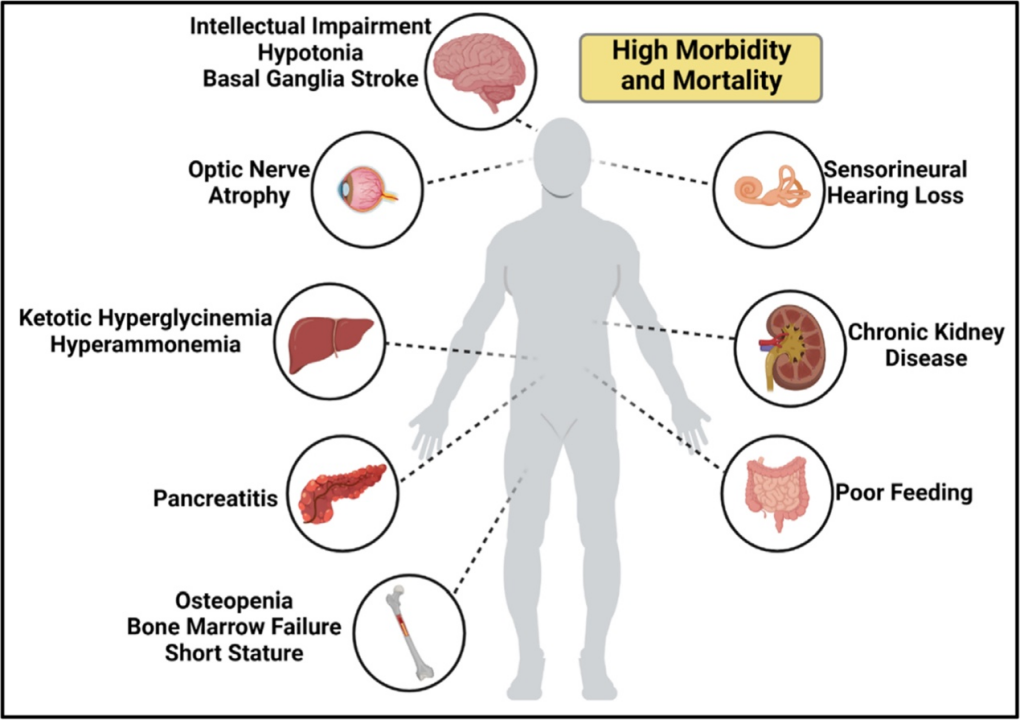
Methylmalonic Acidemia (MMA) is an autosomal recessive organic acid metabolic disorder with onset in the neonatal or early infantile period. Its clinical course is insidious yet rapidly progressive, featuring multi-system injuries. Typical neurological manifestations include intellectual disability, hypotonia, basal ganglia stroke-like lesions, and hyperammonemic encephalopathy. Metabolic disturbances present as ketosis, hyperglycinemia and metabolic acidosis. Multi-organ lesions may involve kidneys (chronic renal failure), vision (optic atrophy), hearing (sensorineural deafness), skeleton (osteoporosis, short stature), and hematopoietic system (bone marrow failure). Patients frequently suffer combined hepatic and renal damage. Newborn screening data shows a birth prevalence of approximately 1 in 28,000.
Pathogenesis
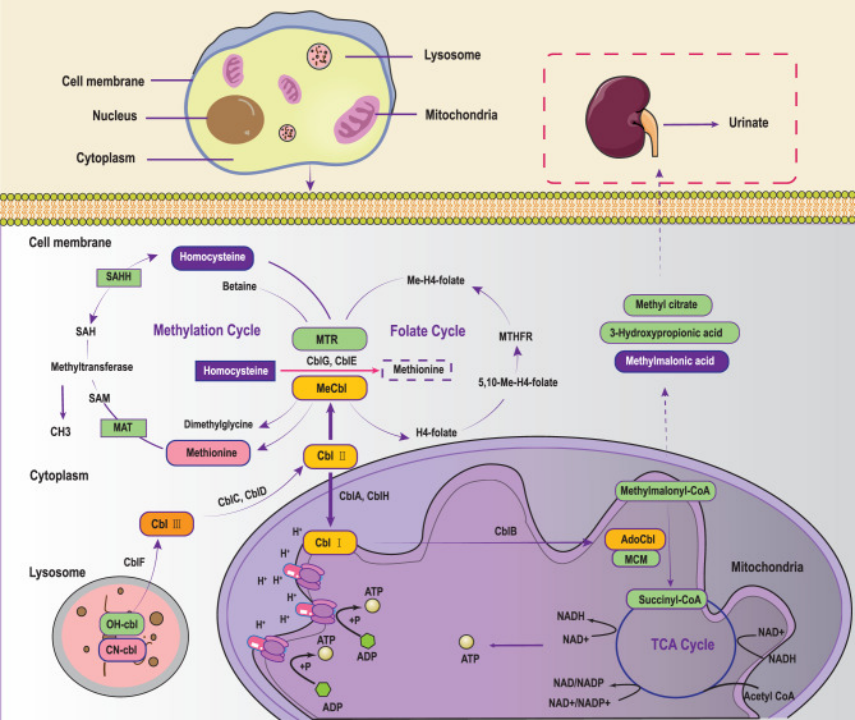
MMA is divided into two major categories: Mut-type (methylmalonyl-CoA mutase deficiency) and cbl-type (cobalamin metabolism disorders). Mut-type arises from MMUT mutations, including mut⁰ with complete enzyme loss and mut⁻ with partial enzyme impairment. The cbl subgroup stems from mutations in genes such as MMAA, MMAB, and MMACHC, disrupting vitamin B12 metabolism and secondary MCM activity. Subtypes cblC, cblD and cblF are classified as combined MMA due to concurrent homocysteinemia, accounting for around 70% of Chinese MMA patients.
Among Chinese populations, cblC is the most prevalent subtype mainly caused by MMACHC pathogenic variants. The dominant mutation is c.609G>A (p.W203X), a nonsense variant generating a premature stop codon and yielding truncated, nonfunctional protein.
Core Pathological Mechanism
MMA is driven by dysfunction of methylmalonyl-CoA mutase (MCM) or its cofactor adenosylcobalamin (AdoCbl), which blocks the conversion of methylmalonyl-CoA to succinyl-CoA and disrupts central carbon metabolism. The upstream substrates propionyl-CoA and methylmalonyl-CoA accumulate massively, and aberrant shunt metabolism generates toxic organic acids (methylmalonic acid, propionic acid, methylcitric acid) plus acylcarnitines (propionylcarnitine, methylmalonylcarnitine), leading to systemic buildup of toxic metabolites.
These toxic compounds trigger cellular damage primarily via mitochondrial dysfunction:
- Competitive inhibition of key tricarboxylic acid (TCA) cycle enzymes such as succinate dehydrogenase, blocking ATP synthesis and causing cellular energy depletion;
- Disrupted oxidative phosphorylation triggers excessive reactive oxygen species (ROS) production and severe oxidative stress.
The central nervous system is the most severely affected organ system:
- Combined metabolic acidosis and propionate-induced hyperammonemia directly trigger astrocytic edema and neuronal dysfunction, causing acute metabolic encephalopathy;
- Chronic energy deficiency and toxic microenvironment interfere with neuronal differentiation, migration and synaptogenesis, resulting in abnormal brain development;
- Oxidative stress impairs oligodendrocyte function, leading to hypomyelination and white matter lesions;
- Cumulative microlesions eventually disrupt whole-brain neural networks and cause progressive decline in cognitive and motor functions.
As the primary excretory organ for methylmalonic acid, kidneys sustain long-term high organic acid burden and persistent oxidative stress, which induce renal tubular epithelial degeneration, necrosis and interstitial inflammation, gradually progressing to chronic renal insufficiency and end-stage renal failure.
Gene Therapy & mRNA Therapeutic Strategies
1. AAV-Mediated Gene Replacement Therapy
Recombinant adeno-associated viral (rAAV) vectors deliver functional MMUT cDNA to major affected organs (predominantly the liver) to achieve long-term stable MCM expression. In 2021, a research team led by Charles P. Venditti at the U.S. National Human Genome Research Institute developed a promoter-free, nuclease-free AAV integration vector. This system inserts codon-optimized human MMUT precisely upstream of the albumin stop codon in mice. Long-lasting therapeutic effects were achieved in MMA model animals, with markedly reduced plasma methylmalonic acid and improved survival rates.
2. mRNA Therapy
Lipid nanoparticle (LNP) delivery systems administer in vitro transcribed mRNA encoding functional MCM to target cells. Moderna’s investigational MMA drug mRNA-3705 has entered Phase 1/2 clinical trials via intravenous infusion to restore MUT enzymatic activity and reduce toxic metabolite accumulation. Interim Phase I/II data released in September 2025 demonstrated favorable safety and tolerability in MUT-deficient MMA patients.
Preclinical Mouse Models for MMA Research
- Mmut<sup>-/-</sup> Knockout Mice Classic Mut-type model with complete ablation of the murine Mmut gene, recapitulating human mut⁰ pathology, including severe methylmalonic acidemia, growth retardation and multi-organ lesions.
- Mmachc<sup>flox/flox</sup>; Pax6-Cre Conditional Mice Cell-type-specific deletion of Mmachc driven by Pax6-Cre, engineered to dissect pathological cascades underlying cblC-type MMA.
- Homozygous W203X Knock-In Mice Recapitulate the prevalent Chinese cblC hotspot variant MMACHC c.609G>A (p.W203X), which introduces a premature translation stop and truncated protein. These pups appear normal at birth but develop poor responsiveness within 24 hours postnatal, accompanied by drastically elevated serum propionylcarnitine (C3).
VeloGene Biotechnology Accelerates Rare Disease Gene Therapy R&D
Gene therapy delivers transformative therapeutic prospects for rare inherited metabolic disorders, yet preclinical mechanistic research and therapeutic efficacy validation fully rely on standardized, well-characterized animal models.
Powered by our proprietary TurboMice™ technology, VeloGene Biotechnology resolves two longstanding technical bottlenecks of traditional transgenic strain construction: prolonged breeding cycles and low success rates for complex multi-locus genetic modifications. The platform supports precise editing of nearly any target genomic locus and generates fully homozygous gene-edited mouse lines directly from embryonic stem cells in as little as 2 months.
VeloGene Biotechnology provides custom MMA research mouse models including Mmut<sup>-/-</sup> knockout mice, Mmachc<sup>flox/flox</sup>; Pax6-Cre conditional mice, and homozygous W203X knock-in mice. Academic and industrial investigators are welcome to contact our technical team for project consultations!