




What Is Familial Hypercholesterolemia?
Familial Hypercholesterolemia (FH) is the most common autosomal dominant genetic disorder, triggered by pathogenic variants in genes including LDLR, APOB, PCSK9 and LDLRAP1. Its hallmark clinical manifestation is drastically elevated low-density lipoprotein cholesterol (LDL-C). Without timely intervention, persistent hyperlipidemia will progress to atherosclerosis and other life-threatening cardiovascular disorders.
FH is divided into heterozygous FH (HeFH) and homozygous FH (HoFH). The prevalence of HeFH is approximately 1 in 500, while HoFH qualifies as a rare disease with an incidence ranging from 1 in 160,000 to 1 in 300,000.
Cholesterol Homeostasis
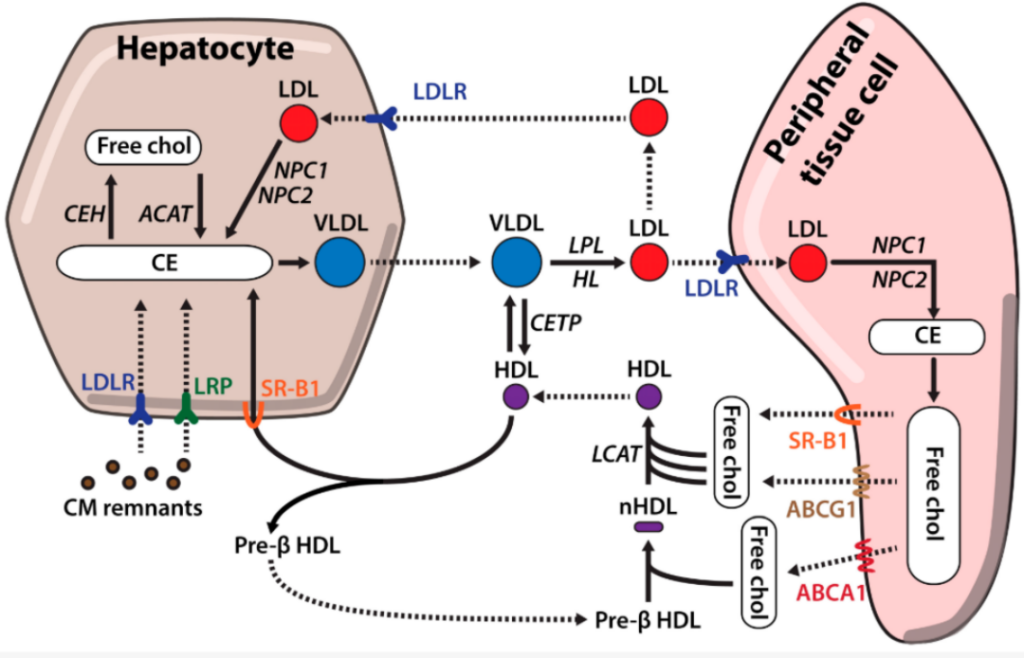
To understand FH pathogenesis, it is necessary to first outline physiological cholesterol metabolism. Human cholesterol originates from two sources: dietary cholesterol absorbed from food, and endogenous cholesterol synthesized intracellularly, with the liver accounting for the vast majority of systemic cholesterol production.
Cholesterol metabolism relies on bidirectional cholesterol trafficking balance between the liver and peripheral tissues. Excess cholesterol in peripheral cells effluxes onto high-density lipoprotein (HDL) particles to form mature HDL. The liver selectively uptakes circulating HDL and LDL via specific receptors such as LDLR. Meanwhile, the liver packages newly synthesized cholesterol into very-low-density lipoprotein (VLDL) and secretes VLDL into the bloodstream to supply peripheral tissues. The HDL-mediated reverse cholesterol transport pathway coupled with hepatic LDL clearance together maintain whole-body cholesterol equilibrium.
Pathogenesis
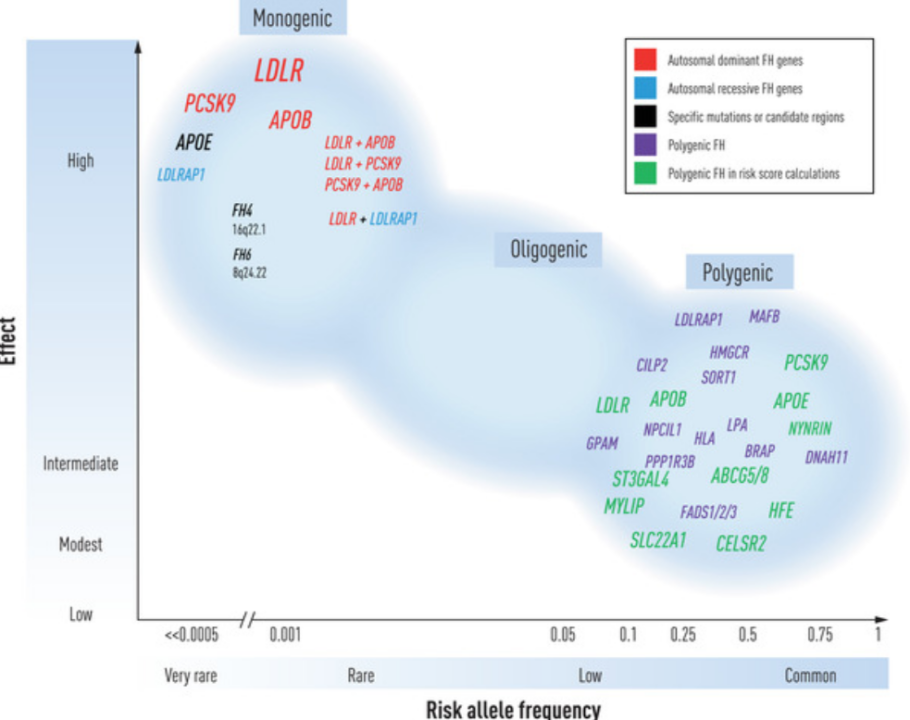
FH is driven by loss-of-function pathogenic gene variants, among which LDLR mutations account for 80–85% of all FH cases, followed by APOB (5–10%), PCSK9 (2%) and LDLRAP1 (<1%). Biallelic LDLRAP1 variants typically induce autosomal recessive hypercholesterolemia (ARH), a distinct clinical entity.
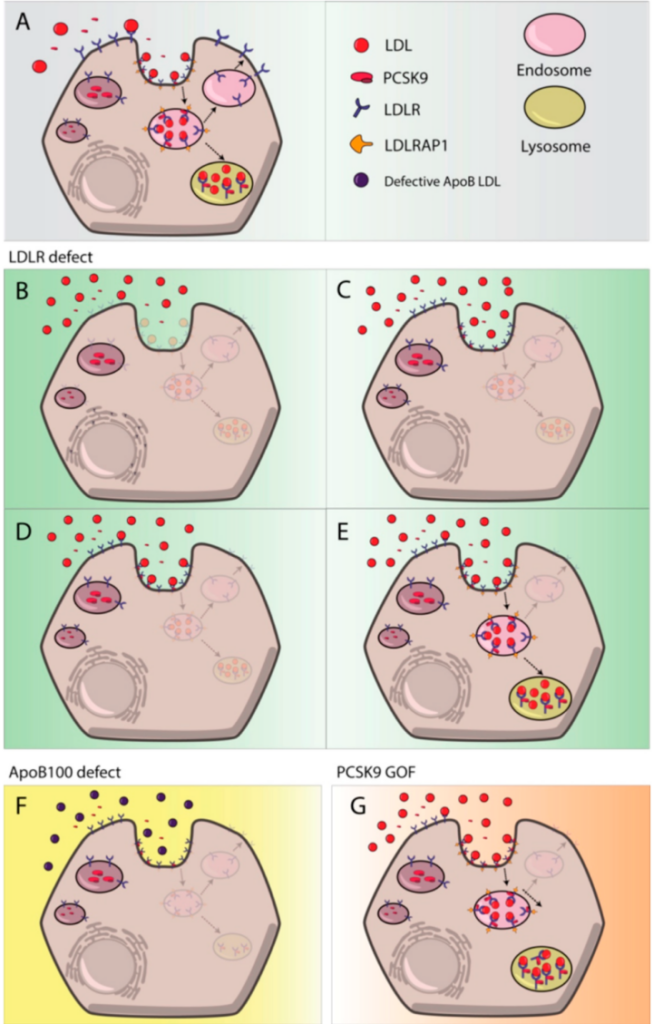
- LDLR Mutations The core pathogenic mechanism underlying LDLR-related FH is impaired hepatic LDL clearance. Under normal physiological conditions, hepatocyte-surface LDLR mediates endocytosis and lysosomal degradation of circulating LDL to sustain lipid homeostasis. Pathogenic alterations (deletion, nonsense, splicing mutations) disrupt LDLR synthesis, intracellular trafficking, ligand binding or receptor recycling. Circulating LDL cannot be efficiently cleared and accumulates chronically, resulting in persistent hypercholesterolemia and progressive atherosclerosis.
- APOB Mutations Pathogenic APOB variants weaken LDL’s binding affinity to LDLR. Patients carrying APOB mutations generally exhibit milder LDL-C elevation compared to those with LDLR loss-of-function variants.
- PCSK9 Mutations PCSK mutations are categorized into loss-of-function (LOF) and gain-of-function (GOF) subtypes. LOF variants generate hypoactive PCSK protein, whereas GOF variants produce hyperfunctional PCSK. GOF mutations enhance extracellular PCSK-LDLR binding and accelerate intracellular LDLR lysosomal degradation, reducing surface LDLR abundance and causing plasma LDL accumulation.
- LDLRAP1 Mutations Defective LDLRAP1 disrupts LDLR recycling, leading to autosomal recessive hypercholesterolemia. Functional LDLRAP1 is required for clathrin-coated vesicle formation during LDL-LDLR endocytosis; impaired uptake of lipoprotein particles drives sustained elevation of circulating LDL-C.
Atherosclerosis Progression
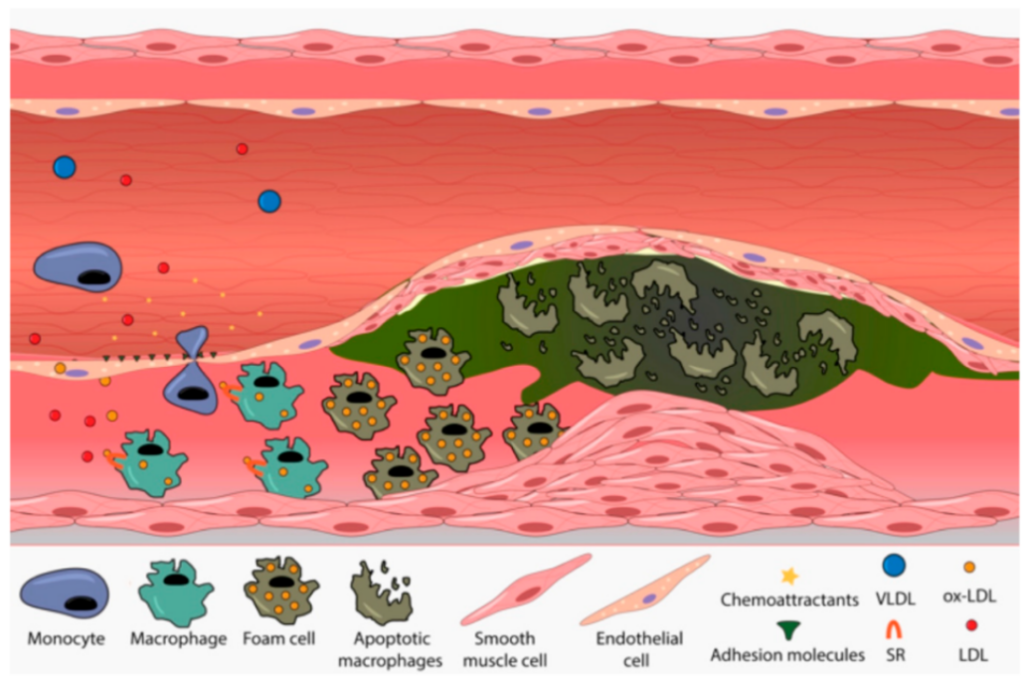
In FH patients, compromised LDLR function leads to chronically elevated plasma LDL-C. Excess circulating LDL infiltrates the vascular endothelium and undergoes oxidative modification, triggering persistent vascular wall inflammation. Monocytes are recruited to the subendothelial space under inflammatory signaling, differentiate into macrophages, and phagocytose oxidized lipids to form foam cells. Massive foam cell aggregation constitutes the lipid core of atherosclerotic plaques, while migrating vascular smooth muscle cells secrete collagen to form protective fibrous caps covering lesions.
As inflammation persists within plaques, the lipid core expands and fibrous caps thin, reducing plaque stability. Rupture of vulnerable plaques exposes procoagulant substrates, induces platelet aggregation and thrombus formation, and precipitates acute atherosclerotic cardiovascular events.
Commonly Used Preclinical Mouse Models
- Ldlr-/- Knockout Mice Complete deletion of the Ldlr gene severely impairs hepatic LDL clearance and induces marked hypercholesterolemia. High-fat diet administration accelerates atherosclerotic plaque formation; this strain is widely utilized to dissect FH pathogenic pathways and screen lipid-lowering therapeutics.
- Apoe-/- Knockout Mice Global ablation of the Apoe gene disrupts systemic lipoprotein metabolism. This classic model is primarily applied to investigate inflammatory and immunological mechanisms of atherosclerosis as well as core lipid metabolic cascades.
- Humanized PCSK9 Mice The full-length murine Pcsk9 locus is replaced with the complete human PCSK9 genomic sequence, enabling tissue-specific human PCSK expression in vivo. This model is ideal for cholesterol metabolism research and preclinical development of PCSK9-targeted gene therapy and antibody drugs.
VeloGene Biotechnology Accelerates FH & Atherosclerosis Therapeutic R&D
Gene therapy and lipid-modifying agents bring promising treatment options for hereditary hyperlipidemia, yet preclinical mechanistic research and in vivo efficacy validation fully depend on standardized, well-characterized animal models.
Powered by our proprietary TurboMice™ technology, VeloGene Biotechnology overcomes two longstanding limitations of traditional transgenic production: lengthy breeding cycles and low editing efficiency for complex multi-gene modifications. Our platform enables precise manipulation of nearly all genomic loci and generates fully homozygous gene-edited mouse lines directly from embryonic stem cells in as little as 2 months.
VeloGene Biotechnology provides custom FH mouse strains including Ldlr-/-, Apoe-/- and humanized PCSK9 mice. Humanized PCSK9 models are available for batch delivery within 2 months. Academic and industrial researchers are welcome to contact our technical team for customized model consultations!