




The global population living with type 2 diabetes mellitus (T2DM) has reached 590 million, and the figure is projected to rise to 700 million by 2045. Meanwhile, obesity remains a prevalent pandemic; over 30% of the population will be overweight in some developed European and American countries by 2030. Faced with the massive burden of metabolic diseases, the glucagon receptor (GCGR), a core master switch regulating glucose and lipid metabolism, has returned to the spotlight of metabolic drug discovery.
GCGR research has evolved from single-target antagonists in the early stage to dual GLP-1R/GCGR agonists and triple GLP-1R/GIPR/GCGR agonist strategies. Retatrutide developed by Eli Lilly stands out as a flagship pipeline candidate with robust clinical progress. Phase III data demonstrated an average weight loss of 24.2% after 48 weeks of treatment, alongside significant improvement in hepatic steatosis.
Owing to its multi-dimensional therapeutic potential in hypoglycemia, weight reduction and metabolic dysfunction-associated steatotic liver disease (MASLD), GCGR has emerged as a leading novel target for next-generation metabolic disease therapeutics.
Pathogenic Mechanisms
The glucagon receptor (GCGR) belongs to class B G protein-coupled receptors (GPCRs). It is widely expressed in hepatocytes, pancreatic α-cells, kidneys and adipose tissue.
As a central hub governing glucose and lipid homeostasis, GCGR mediates hepatic glycogenolysis, gluconeogenesis and lipid metabolism, and also participates in insulin secretion modulation and appetite suppression.
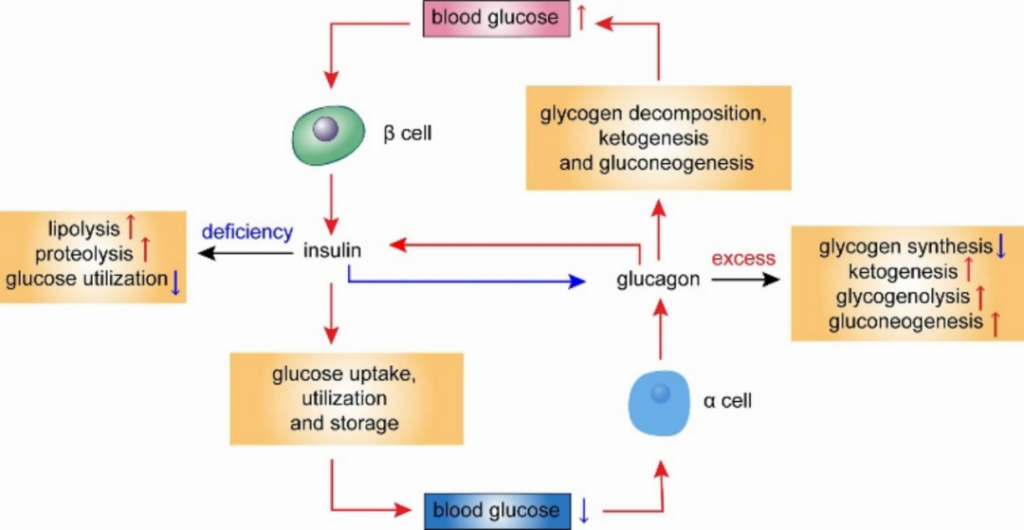
The core pathogenesis of diabetes (especially T2DM) lies in absolute or relative insulin deficiency and dual hormone imbalance between insulin and glucagon. GCGR acts as the primary effector mediating glucagon’s pathological effects.
Under physiological conditions, glucagon binds GCGR and activates downstream cAMP-PKA (and PLC-IP₃) signaling cascades, triggering hepatic glucose production while forming a pancreatic negative feedback loop balancing glucose elevation and reduction to maintain metabolic homeostasis. This equilibrium collapses under pathological conditions:
- Insulin deficiency directly reduces peripheral glucose utilization, boosts lipolysis and accelerates protein breakdown;
- Hyperglucagonemia: Loss of inhibitory control over pancreatic α-cells leads to excess glucagon secretion, which persistently activates GCGR. This suppresses hepatic glycogen synthesis, drives unrestrained glycogen breakdown and gluconeogenesis, and accelerates ketogenesis.
In cases of severe insulin insufficiency, sustained GCGR signaling serves as the major driver of endogenous persistent hyperglycemia and hyperketonemia. Even in patients with relatively stable insulin levels, excessive GCGR activation directly induces hyperglycemia and glycosuria. Therefore, therapeutic blockade of pathological GCGR-mediated hyperglycemic signaling represents a vital strategy for diabetes management.
Synergistic Glucose-Lowering Mechanism of GCGR & GLP-1R
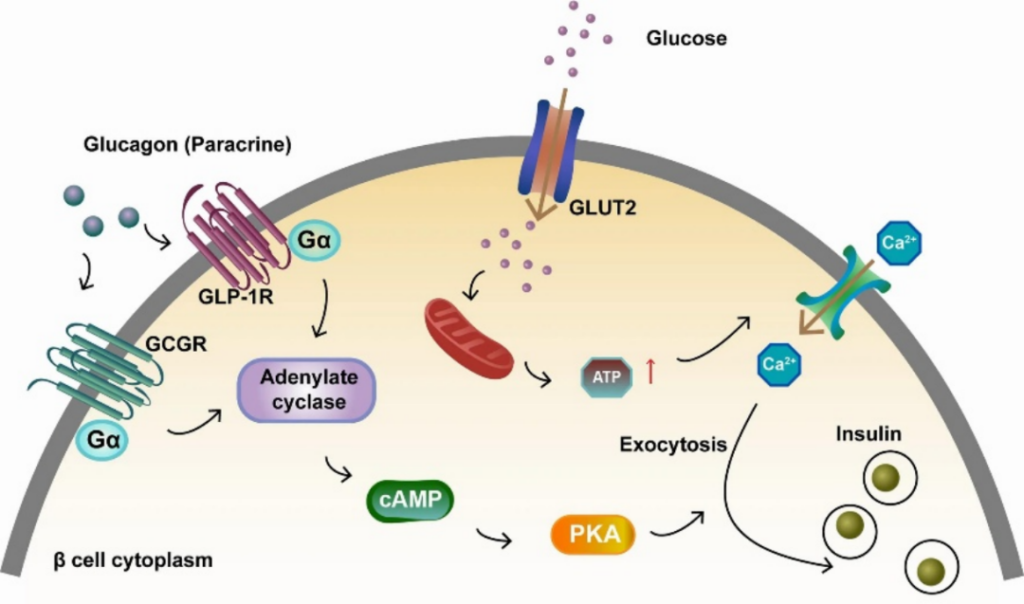
Under normal glycemic conditions, elevated blood glucose enters pancreatic β-cells via GLUT2 glucose transporters, elevating intracellular ATP levels to trigger basal insulin release.
Simultaneously, glucagon acts in a paracrine manner through GCGR and GLP-1R to co-activate the Gαs-cAMP-PKA axis, drastically amplifying glucose-stimulated calcium influx and insulin exocytosis. Notably, GCGR exerts stronger pro-insulin-secreting effects than GLP-1R under overnutrition conditions such as high-fat diets.
Based on this mechanism, GLP-1R/GCGR dual agonists leverage two complementary pathways: GLP-1R suppresses appetite and protects pancreatic β-cells, while GCGR amplifies insulin secretion within pancreatic islets and inhibits hepatic gluconeogenesis. This triple synergistic effect covering central appetite regulation, peripheral hepatic metabolism and islet paracrine signaling lays a solid mechanistic foundation for next-generation anti-diabetic agents.
Preclinical Mouse Strains Widely Used in Research
Therapeutic development requires preclinical animal models that faithfully recapitulate human pathological features.
- Humanized GCGR Mice The endogenous murine Gcgr locus is replaced with full-length human GCGR sequence, retaining physiological glucagon-induced glycemic elevation phenotypes. This model is primarily applied for pharmacodynamic evaluation and interspecies difference assessment of GCGR antagonists and monoclonal antibodies.
- Dual Humanized GLP-1R/GCGR Mice Both murine Glp1r and Gcgr genes are substituted with human orthologs. The strain recapitulates GLP-1R-mediated insulin sensitization and GCGR-driven thermogenesis & lipolysis, serving as the core preclinical model for efficacy and safety testing of dual agonists such as Mazdutide.
- Triple Humanized GLP-1R/GIPR/GCGR Mice Triple human gene knock-in at corresponding murine loci. The model recapitulates robust glucose lowering, profound weight loss and hepatic fat clearance driven by coordinated activation of the three receptors, making it the gold standard for preclinical pharmacology, dose scaling and off-target risk evaluation of triple agonists.
VeloGene Biotechnology Supports Mechanism Research & Drug Development
Given the complex GCGR signaling network and tight drug development timelines, modeling accuracy and production speed are decisive factors for research success. VeloGene Biotechnology’s proprietary TurboMice™ technology overcomes longstanding limitations of traditional transgenic construction and enables precise editing of nearly any target genomic locus. Conventional crossbreeding and screening workflows are eliminated; fully homozygous gene-edited mouse lines can be generated directly from embryonic stem cells in as little as 2 months.
VeloGene Biotechnology offers customized GCGR-related mouse models including humanized GCGR mice, dual human GLP-1R/GCGR mice and triple humanized GLP-1R/GIPR/GCGR strains to accelerate your compound validation and secure competitive research timelines.
References
[1] https://zhuanlan.zhihu.com/p/648738535
[2] Jia Y, Liu Y, Feng L, Sun S, Sun G. Role of Glucagon and Its Receptor in the Pathogenesis of Diabetes. Front Endocrinol. 2022;13:928016. DOI: 10.3389/fendo.2022.928016