




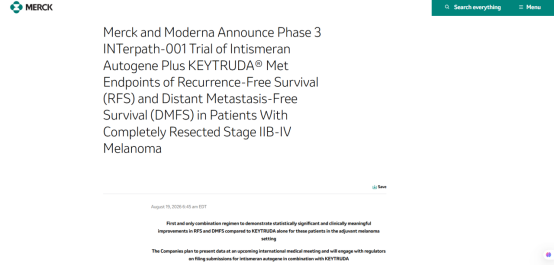
On August 19, 2026, blockbuster news swept the biotech community: Moderna and Merck announced that Intismeran autogene (mRNA‑4157/V940), a personalized mRNA cancer vaccine, in combination with Keytruda for adjuvant treatment of high‑risk completely resected stage III/IV melanoma met the primary endpoint of recurrence‑free survival (RFS) and the key secondary endpoint of distant‑metastasis‑free survival (DMFS) in the INTerpath‑001 Phase 3 trial. This marks the world’s first successful Phase 3 readout for an mRNA‑based tumor vaccine.
This milestone pushes mRNA tumor vaccines from the proof‑of‑concept era into the regulatory‑grade validation era. Yet few people ask: before entering human trials, what animal models did scientists use to “rehearse” this immunological battle? The answer lies in a special category of research animals — gene‑edited humanized mice.
1. How mRNA Tumor Vaccines Work: Issuing a “Wanted Notice” for Cancer Cells
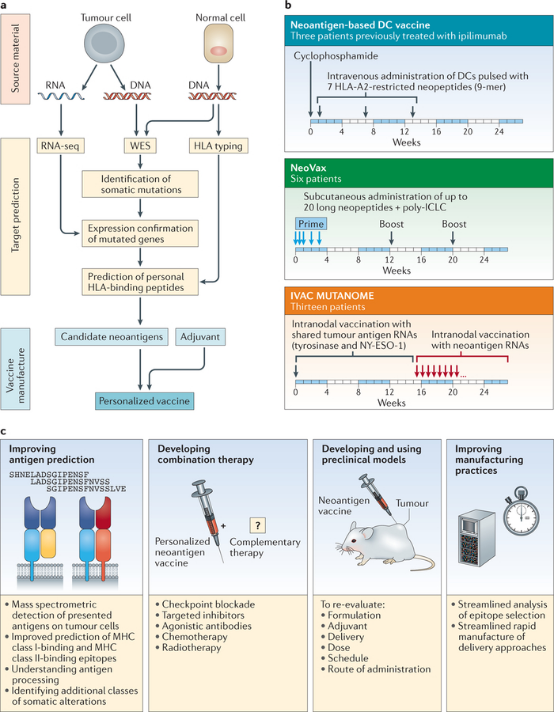
The logic behind personalized mRNA tumor vaccines is straightforward:
- Sequence patient tumor samples and deploy AI to predict neoantigens.
- Synthesize mRNA encoding these neoantigens and encapsulate the mRNA within lipid nanoparticles (LNPs).
- Administer the formulation in vivo, enabling dendritic cells to “read” the neoantigen “wanted notice” and train CD8⁺ T‑cells to precisely eliminate cancer cells carrying mutational fingerprints.
The strength of this modality lies in “one‑of‑a‑drug per patient”, which also creates its biggest challenge. Critical questions must be answered pre‑clinically: Are candidate neoantigens valid? Is HLA‑restricted antigen presentation functional? Are T‑cells genuinely activated? Conventional mouse strains cannot answer these questions.
2. Why Conventional Mice Fall Short: The MHC‑HLA “Language Barrier”
T‑cells do not recognise antigens in isolation. They only recognise complexes formed by MHC/HLA plus antigenic peptides. Mice utilise the H‑2 MHC system, while humans rely on the HLA system. The binding‑pocket preferences between the two systems differ substantially.
When human‑derived neoantigen peptides are introduced into standard C57BL/6 or BALB/c mice, common pitfalls emerge: murine MHC fails to present target peptides, T‑cells remain unactivated, producing false‑negative efficacy results. Conversely, positive efficacy observed in mice may not translate to human outcomes, leading to disconnects between pre‑clinical data and clinical performance.
For this reason, the gold‑standard pre‑clinical evaluation platform for tumour vaccines is the HLA‑humanized gene‑edited mouse, which bypasses this species‑specific barrier.
3. Three Major Classes of Gene‑Edited Mice for mRNA‑Vaccine Evaluation
1) HLA‑transgenic / knock‑in mice: validate antigen‑presentation competence
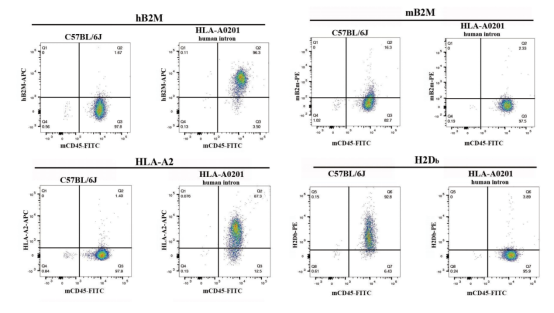
Historical data show that older HLA‑transgenic mouse models exhibit low human HLA‑A2 transgene expression. Even the latest third‑generation HHDI mice, which employ murine α3, transmembrane and intracellular domains, display markedly reduced peripheral CD8⁺ T‑cell counts compared with wild‑type animals. This suggests that the hB2M‑HLA‑A2.1‑H‑2D knock‑in design may impair CD8⁺ T‑cell development and skew splenic T‑cell subset proportions.
VeloGene Biotechnology’s HLA‑A02:01 humanized mice adopt an optimised HHD design. These animals feature normal CD8⁺ T‑cell development together with robust HLA‑A2 expression. VeloGene offers multiple HLA haplotype humanized strains including HLA‑A0201, A2402 and HLA‑C0102 to suit diverse project requirements.
2) Immune‑system reconstituted mice (nuNPG (hyperlink: nuNPG mice) engrafted with human CD34⁺ HSCs or PBMC): model the full‑human immune network
Human haematopoietic stem cells or peripheral‑blood mononuclear cells are engrafted into severely immunodeficient hosts to reconstitute human‑derived T‑cell, B‑cell, NK‑cell and myeloid compartments.
- Can be combined with PDX tumour grafts to recapitulate the “human‑immune + human‑tumour” microenvironment.
3) Syngeneic tumour models (MC38, B16‑OVA, CT26, 4T1): high‑throughput cost‑effective screening
Immunocompetent inbred mice implanted with syngeneic tumour cell lines. These models feature low cost and high throughput and are well‑suited for early‑stage proof‑of‑concept work on dose finding, immunisation schedules and PD‑1 combination regimens. They cannot, however, replace HLA‑humanized mice. Syngeneic models answer “does this work in mice?”; HLA‑humanized mice answer “will this likely work in humans?”.
Typical real‑world R&D workflow: Syngeneic‑model high‑throughput screening → HLA‑humanized mice for antigen‑presentation and T‑cell‑activation validation → immune‑reconstituted PDX models for assessment of tumour‑growth inhibition and relapse prevention.
4. Domestic mRNA Tumor‑Vaccine Opportunities Expand, Triggering Surging Demand for Pre‑clinical Models
R&D investment in domestic mRNA tumour vaccines is accelerating rapidly, unlocking enormous industry opportunities. Current development features two parallel tracks: personalised neoantigen vaccines deliver promising immune‑activation and clinical‑benefit signals in advanced solid tumours and post‑surgical adjuvant settings. Meanwhile, off‑the‑shelf vaccines targeting defined antigens have moved into late‑stage clinical development, with combination‑therapy programmes underway for indications such as pre‑cervical cancer lesions and pancreatic cancer.
Growing industry participation has dramatically increased upstream demand for neoantigen prediction and immunogenicity‑assessment animal models, which form critical foundational infrastructure for advancing drug pipelines.
As the personalised‑vaccine space becomes increasingly competitive, robust concordance between HLA‑matched humanized mouse data and AI‑predicted neoantigen epitopes becomes indispensable. Every candidate epitope must first be validated in human‑HLA‑expressing mice to confirm feasible antigen presentation.
Not long ago, cancer inspired widespread fear. Today scientists aim to teach our immune systems to recognise cancer’s molecular “fingerprints” with a single mRNA vaccine shot. Moderna’s breakthrough brings real hope for curative therapies. Behind this milestone stand countless gene‑edited mice serving as surrogates for human patients in pre‑clinical testing. Though often overlooked, they constitute the critical bridge connecting laboratory discovery to bedside patient care.
Science gains its human dimension when each small technical advance can rewrite life outcomes. This Phase‑3 positive readout marks only the starting point; the era of mRNA tumour vaccines has only just begun.
References
- https://www.merck.com/news/merck-and-moderna-announce-phase-3-interpath-001-trial-of-intismeran-autogene-plus-keytruda-met-endpoints-of-recurrence-free-survival-rfs-and-distant-metastasis-free-survival-dmfs-in-patient/
- Hu Z, Ott PA, Wu CJ. Towards personalized, tumour‑specific, therapeutic vaccines for cancer. Nat Rev Immunol. 2018 Mar;18(3):168‑182. doi:10.1038/nri.2017.131. Epub 2017 Dec 11. PMID: 29226910; PMCID: PMC6508552.