




On November 7–10, 2025, the American Heart Association (AHA) Scientific Sessions was held in New Orleans, USA. During the conference, Merck’s research team presented Phase III clinical data for MK0616 (Enlicitide), the world’s first oral PCSK9 inhibitor. This landmark achievement marks a major breakthrough in lipid-lowering therapeutics; Enlicitide decanoate delivers robust lipid-lowering efficacy with favorable safety profiles.
Brief Introduction to the PCSK9 Target
Proprotein Convertase Subtilisin/Kexin Type 9 (PCSK9) is a serine protease encoded by the PCSK9 gene. It is predominantly synthesized and secreted by the liver, with minor expression in the small intestine, pancreas, kidney, lung and central nervous system. PCSK9 plays a pivotal role in regulating circulating cholesterol, particularly low-density lipoprotein cholesterol (LDL-C). The PCSK protein comprises multiple functional domains: signal peptide, inhibitory prodomain, subtilisin-like catalytic domain, hinge region and cysteine/histidine-rich C-terminal domain, which jointly govern its proteolytic activity and receptor-binding capacity.
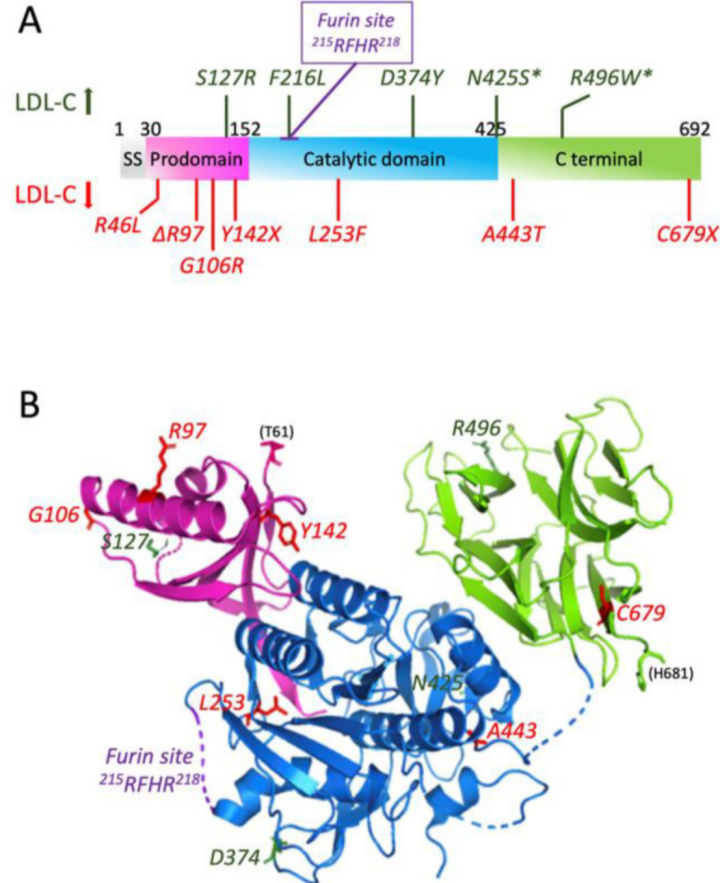
1. Hypercholesterolemia: Master Regulator of Cholesterol Homeostasis
On hepatocyte surfaces, low-density lipoprotein receptors (LDLRs bind and internalize LDL-C. Under normal physiological conditions, LDLR is recycled back to the cell membrane after lysosomal degradation of bound LDL-C. However, PCSK9 specifically binds the EGF-A domain of LDLR to form a stable complex. Following endocytosis, PCSK9 acts as a degradation signal within acidic endosomes, shuttling the complex to lysosomes for irreversible LDLR breakdown. This reduces the quantity of functional LDLR on hepatocytes, impairs hepatic LDL-C clearance and elevates plasma LDL-C levels, ultimately triggering hypercholesterolemia.
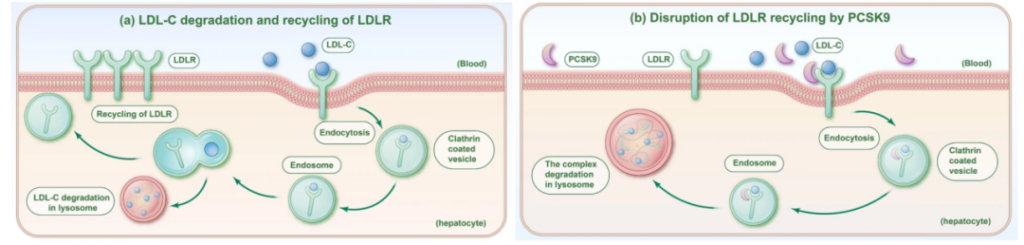
2. Atherosclerosis: Multi-Mechanism Driver of Vascular Lesions
PCSK9 accelerates atherosclerotic progression via multiple pathways:
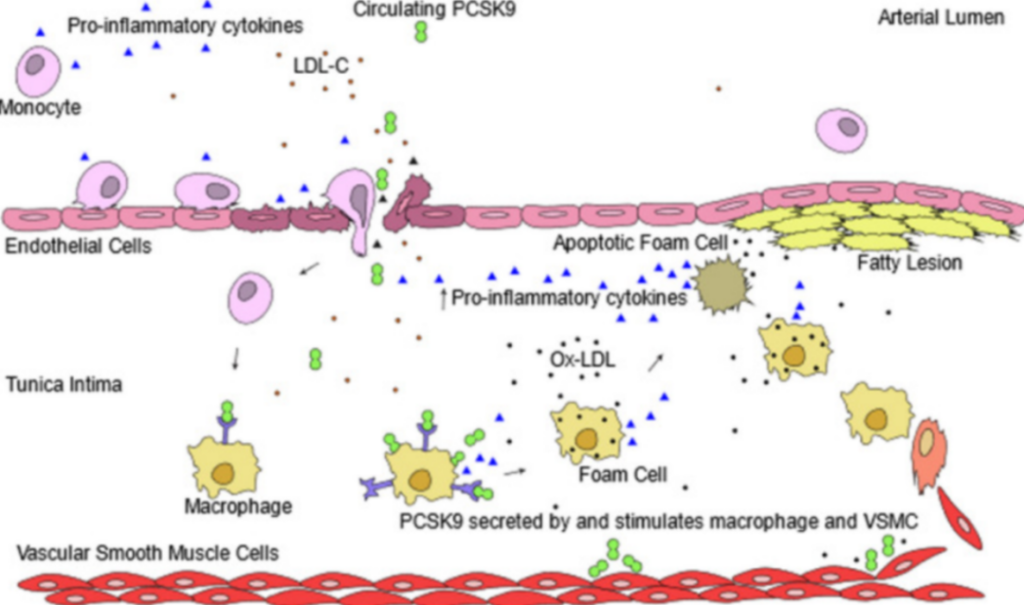
First, PCSK9 mediates hepatic LDLR degradation and raises circulating LDL-C. Excess LDL-C infiltrates the arterial intima and undergoes oxidative modification into oxidized LDL (ox-LDL), which is engulfed by monocytes to form foam cells — the hallmark of early fatty streak lesions.
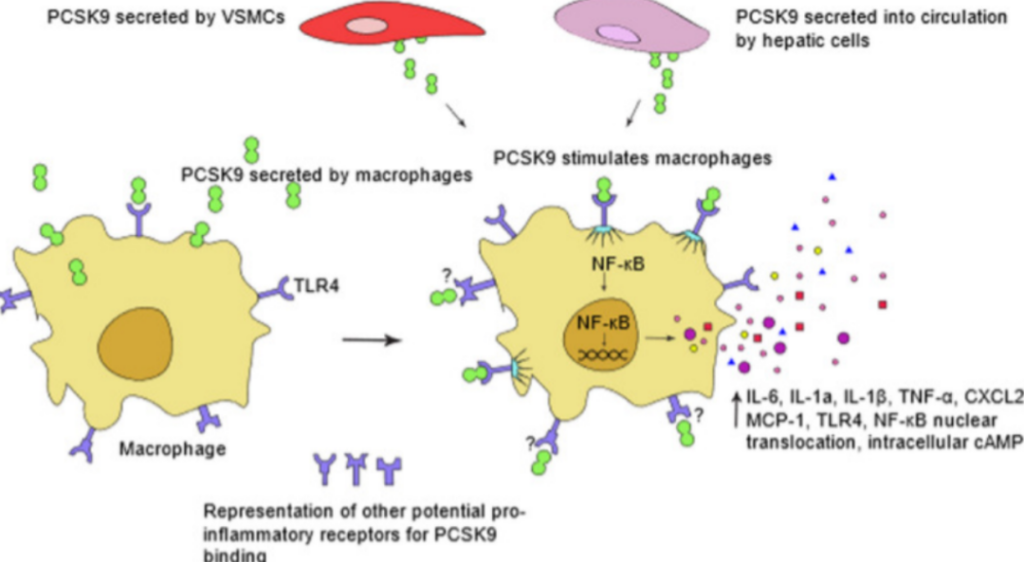
Beyond systemic lipid regulation, PCSK9 is secreted by macrophages and vascular smooth muscle cells (VSMCs), exerting autocrine and paracrine effects on these cell populations. It binds Toll-like receptor 4 (TLR4) on cell membranes and activates NF-κB signaling, stimulating secretion of pro-inflammatory cytokines including IL-6 and TNF-α to amplify local vascular inflammation. Chronic inflammation further drives VSMC proliferation/migration and foam cell apoptosis, forming necrotic cores. Collectively, PCSK9 synergistically amplifies hypercholesterolemia and vascular inflammation to promote atherosclerotic plaque formation, progression and destabilization.
3. Cancer Immunology: Emerging Star Therapeutic Target
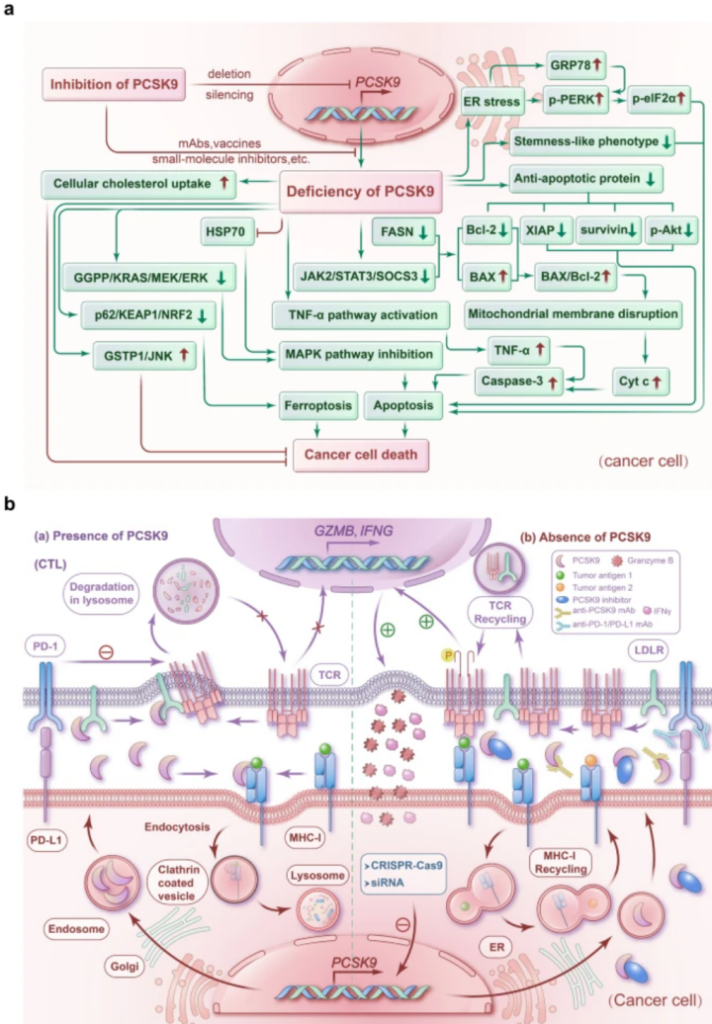
Mounting evidence confirms aberrant PCSK expression in numerous malignancies, including hepatocellular carcinoma, colorectal adenocarcinoma, esophageal cancer, gastric adenocarcinoma and breast cancer. PCSK9 boosts tumor cell proliferation, inhibits apoptosis and enhances invasion/metastasis through dysregulated cholesterol metabolism, endoplasmic reticulum stress and aberrant MAPK/PI3K signaling.
PCSK9 drives tumor progression via dual intracellular and microenvironmental mechanisms:
- Tumor cell intrinsic effects: Activates KRAS-MAPK and PI3K-Akt pro-survival cascades, upregulates HSP70 to accelerate proliferation and invasion; modulates Bax/Bcl-2 ratios, suppresses caspase activity and upregulates XIAP to block apoptotic signaling. It also degrades tumor suppressor PTEN to induce drug resistance.
- Tumor microenvironment effects: Downregulates cell-surface MHC-I to impair antigen presentation and facilitate tumor immune evasion; directly binds T-cell LDLR to disrupt T-cell receptor membrane recycling, inhibiting T-cell activation and cytotoxic function. These combined effects blunt anti-tumor immunity and confer resistance to immune checkpoint inhibitors. Figure Source: Targeting proprotein convertase subtilisin/kexin type 9 (PCSK9): from bench to bedside
PCSK-Targeted Gene Therapy Modalities
- Gene Editing Therapy Lipid nanoparticles (LNPs encapsulating gene editing machinery) are intravenously administered and selectively taken up by hepatocytes to permanently inactivate hepatic PCSK9.
- RNA Interference Therapy GalNAc-conjugated siRNA specifically binds the asialoglycoprotein receptor (ASGPR) on hepatocytes, enabling liver-specific delivery to degrade PCSK9 mRNA and halt PCSK9 protein production.
- Meganuclease Gene Editing Therapy Meganucleases delivered via AAV vectors specifically cleave hepatic PCSK9 to induce loss-of-function mutations.
Preclinical Mouse Models for PCSK Research
- Pcsk9-/- Knockout Mice The defining phenotype is drastically reduced plasma LDL-C (40–60% lower than wild-type) accompanied by markedly elevated hepatocyte LDLR protein abundance.
- Humanized PCSK Mice Physiologically express full-length human PCSK without murine endogenous PCSK interference; the gold-standard model for in vivo pharmacodynamic evaluation of anti-PCSK9 antibodies, RNAi and small-molecule inhibitors.
- PCSK9 Humanized / ApoE Double-Knockout Mice Human PCSK9 knock-in on an Apoe<sup>-/-</sup> background, recapitulating severe spontaneous hyperlipidemia and atherosclerotic pathology.
- Liver-Specific Pcsk9 Conditional Knockout Mice Selective ablation of hepatic PCSK9; ideal for precise dissection of liver-restricted drug mechanisms.
VeloGene Biotechnology Accelerates Mechanism Research & Drug Development
Gene therapy unlocks new treatment avenues for prevalent metabolic and neoplastic disorders, yet preclinical validation fully relies on standardized, well-characterized animal models. Powered by proprietary TurboMice™ technology, VeloGene Biotechnology overcomes two historic limitations of conventional transgenic construction: lengthy breeding cycles and low success rates for complex multi-locus editing. Our platform enables precise targeting of nearly any genomic locus, generating fully homozygous gene-edited mouse lines directly from embryonic stem cells in as little as two months.
VeloGene Biotechnology offers custom PCSK research models including Pcsk9-/- knockout mice, humanized PCSK mice, PCSK humanized/Apoe-/- double mutant mice and liver-specific conditional Pcsk9 knockout strains. Academic and industrial investigators are welcome to submit project consultations!
Reference
- Abifadel M, et al. Mutations in PCSK9 cause autosomal dominant hypercholesterolemia. Nat Genet. 2003;34:154–156.
- Cohen J, et al. Low LDL cholesterol in individuals of African descent resulting from frequent nonsense mutations in PCSK9. Nat Genet. 2005;37:161–165.
- Lagace TA. PCSK9 and LDLR degradation. Curr Opin Lipidol. 2014;25:387–393.
- Liu X, et al. Inhibition of PCSK9 potentiates immune checkpoint therapy for cancer. Nature. 2020;588:693–698.
- Seidah NG, Prat A. The Multifaceted Biology of PCSK9. Endocr Rev. 2022;43:558–582.
- Mahboobnia K, et al. PCSK9 and cancer: Rethinking the link. Biomed Pharmacother. 2021;140:111758.