




What Is Isovaleric Acidemia?
Isovaleric Acidemia (IVA) is a rare autosomal recessive inborn organic acid metabolic disorder caused by pathogenic variants in the IVD gene encoding isovaleryl-CoA dehydrogenase. Gene defects block leucine catabolism, leading to massive systemic accumulation of toxic metabolites including isovaleric acid.
Affected newborns often present acute onset feeding difficulty, vomiting, lethargy and metabolic acidosis, accompanied by a distinctive “sweaty feet” body odor. Severe untreated episodes readily induce permanent brain damage or fatal outcomes. The average national incidence in China is approximately 1 in 160,000 live births.
Pathogenesis
IVA arises from loss-of-function mutations in the IVD gene, which encodes isovaleryl-CoA dehydrogenase — a rate-limiting enzyme essential for leucine breakdown.
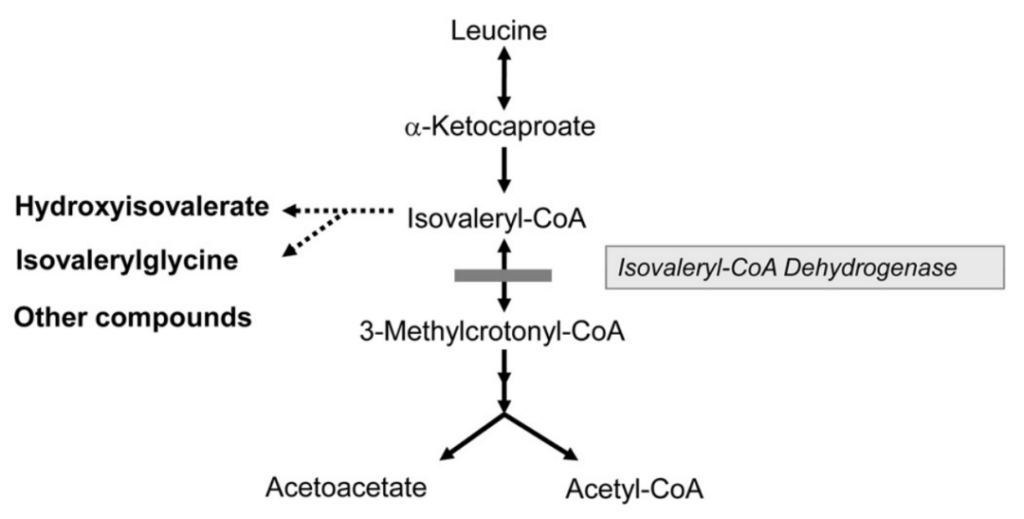
Physiological leucine metabolism: Leucine undergoes transamination and decarboxylation to generate isovaleryl-CoA. Under normal conditions, IVD catalyzes its oxidation into 3-methylcrotonyl-CoA, which is further degraded into acetoacetate and acetyl-CoA to enter central energy metabolic pathways.
When IVD activity is abolished, the leucine metabolic cascade stalls at the isovaleryl-CoA intermediate. Excess isovaleryl-CoA is shunted into alternative bypass pathways, generating toxic byproducts such as 3-hydroxyisovaleric acid and isovalerylglycine — the signature biochemical markers markedly elevated in patient blood and urine. These toxic metabolites directly trigger metabolic acidosis and multi-organ brain injury.
Prolonged buildup of isovaleryl-CoA and its derivatives disrupt mitochondrial function (e.g., succinyl-CoA ligase activity) and interfere with the tricarboxylic acid (TCA) cycle. They also suppress key urea cycle enzymes including N-acetylglutamate synthase, resulting in impaired energy production and hyperammonemia accompanied by widespread multi-organ damage.
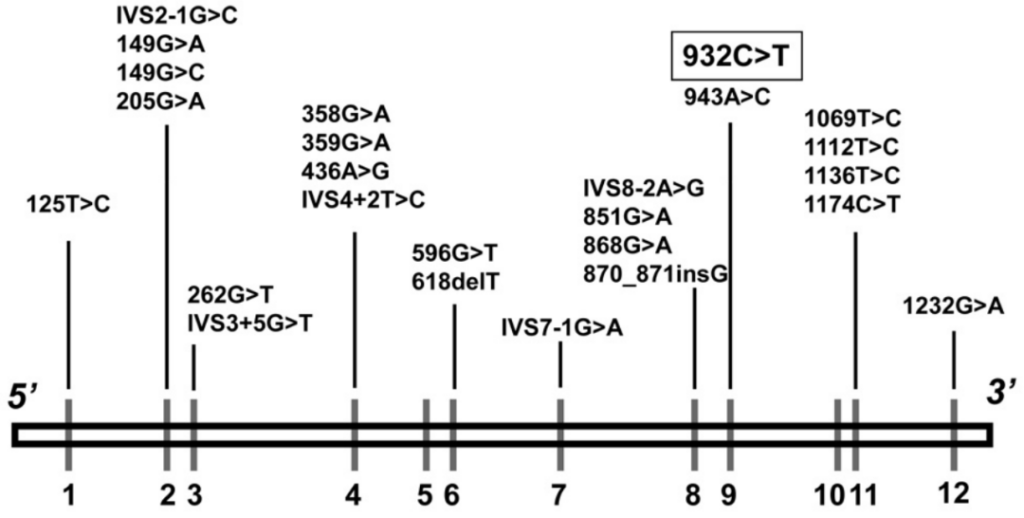
Pathogenic IVD mutations exhibit prominent ethnic heterogeneity:
- c.932C>T (A282V) is the prevalent variant in European and American populations;
- c.1208A>G represents the major hotspot among Chinese patients;
- Other sporadic lesions include missense substitutions and splice-site frame-shift variants (e.g., c.149G>A, intronic IVS mutations).
Preclinical Mouse Models for IVA Research
Two core preclinical strains are widely adopted for isovaleric acidemia mechanistic and therapeutic research:
- Ivd-/- Global Knockout Mice Complete germline deletion of the murine Ivd gene. Most homozygous animals succumb to severe metabolic crisis around weaning age with limited long-term survival, suitable for genotype validation and embryonic-stage disease mechanism studies.
- Tissue-Specific Conditional Ivd Knockout MiceIvd is selectively ablated in defined organs such as liver or nervous tissue via Cre-loxP recombination. This design bypasses the full-body homozygous lethality of global knockout strains, recapitulating localized metabolite accumulation and organ dysfunction; it serves as a classic tool to dissect tissue-specific pathogenic cascades underlying IVA.
VeloGene Biotechnology Accelerates IVA Gene Therapy R&D
Gene therapy opens new therapeutic avenues for rare inherited metabolic diseases, yet preclinical mechanism exploration and therapeutic efficacy validation fully rely on well-characterized, standardized animal models.
Powered by proprietary TurboMice™ technology, VeloGene Biotechnology overcomes two historic limitations of traditional transgenic strain development: lengthy breeding cycles and low editing efficiency for complex multi-locus modifications. Our platform enables precise targeting of nearly any genomic locus, eliminating conventional crossbreeding and screening workflows. Fully homozygous gene-edited mouse lines can be generated directly from embryonic stem cells in as little as 2 months.
VeloGene Biotechnology provides custom IVA research mouse models including global Ivd<sup>-/-</sup> knockout mice and tissue-specific conditional Ivd knockout strains. Academic and industrial investigators are welcome to contact our technical team for tailored project consultations!
References
[1] Vockley J, Ensenauer R. Isovaleric acidemia: new aspects of genetic and phenotypic heterogeneity. Am J Med Genet C Semin Med Genet. 2006;142C(2):95-103. DOI:10.1002/ajmg.c.30089. PMID:16602101; PMCID:PMC2652706