




What Is Severe Congenital Neutropenia?
Severe Congenital Neutropenia (SCN) is a rare inherited bone marrow failure syndrome characterized by arrested myeloid differentiation, with an estimated prevalence of 3–8.5 cases per million people.
Due to profound neutropenia, patients suffer recurrent infections from early childhood. During long-term disease progression, approximately 10%–20% of patients progress to myelodysplastic syndrome (MDS) or acute myeloid leukemia (AML).
Pathogenesis
SCN arises from diverse gene mutations that disrupt myeloid progenitor survival and differentiation. The disorder exhibits high genetic heterogeneity. Autosomal dominant variants in ELANE account for 40%–60% of all cases, with common pathogenic hotspots including p.C151Y and p.G214R. Autosomal recessive mutations in HAX1 are also prevalent, featuring typical variants p.Q190X and p.R86X.
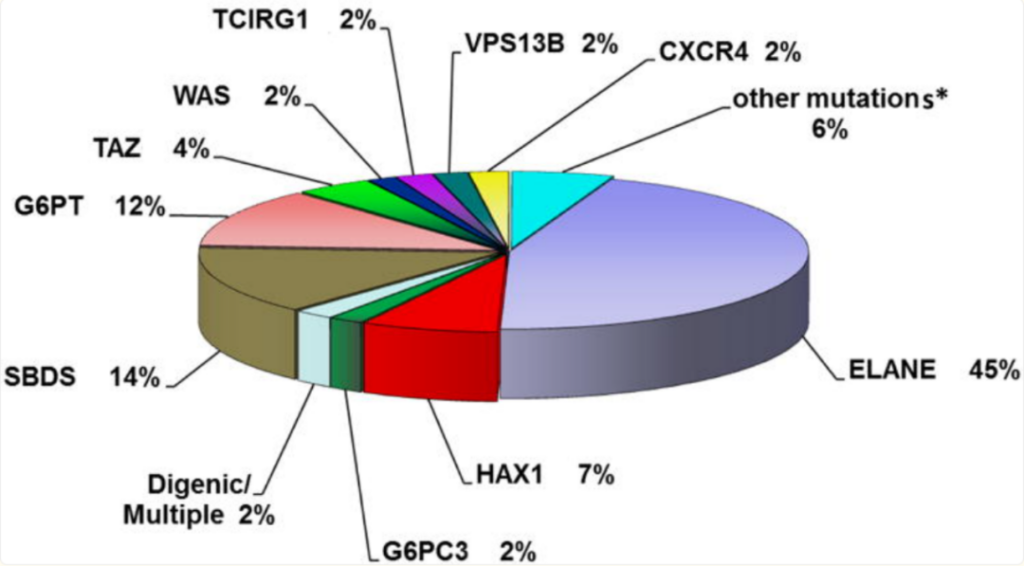
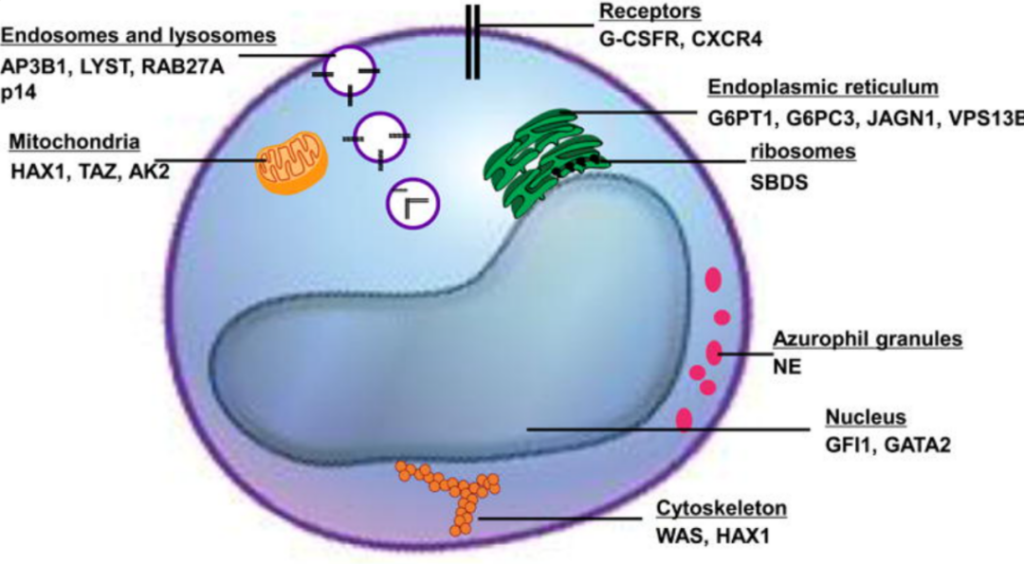
These gene variants alter the structure and subcellular localization of key proteins, disrupting myeloid progenitor homeostasis. Aberrant activation of endoplasmic reticulum (ER) stress and mitochondrial apoptotic signaling represents the core molecular cascade linking genetic lesions to neutropenia.
1. ER Stress and Myeloid Apoptosis
ELANE mutations induce intracellular accumulation of abnormal neutrophil elastase, triggering the unfolded protein response (UPR) via signaling mediators GRP-78, XBP1 and ATF6, ultimately driving myeloid progenitor death. Different variants trigger UPR of varying intensity; reduced secretion of secretory leukocyte protease inhibitor (SLPI) further exacerbates ER stress.
Cell death is mediated via two primary axes:
- Disrupted apoptotic balance: ELANE and HAX1 mutations downregulate anti-apoptotic proteins such as Bcl-2 and Bcl-xL while upregulating pro-apoptotic mediators including BFL-1 and Mcl-1. Loss of HAX1 directly impairs mitochondrial integrity, inducing cytochrome c release and accelerating apoptosis.
- Excessive ER burden: Mutations in JAGN1, G6PC3 and other genes disrupt protein glycosylation, aggravating ER overload and cell death. Collectively, ER and mitochondrial pathways form a dual apoptotic network underlying granulocyte loss.
2. Dysregulated Transcription and Lineage Skewing
Apart from severe neutropenia, patients frequently present elevated monocytes and eosinophils. This phenomenon arises from innate immune compensation secondary to granulocyte depletion, combined with disrupted transcriptional control of myeloid lineage commitment.
In myeloid progenitors, expression of the granulopoiesis master transcription factor C/EBPα is markedly suppressed, while monocyte-driving PU.1 remains relatively intact or even elevated, skewing hematopoietic differentiation toward the monocytic lineage. Additionally, dysfunctional Inhibitor of DNA Binding 1 (Id1) contributes to pathology. Id1 normally promotes granulocyte maturation and inhibits eosinophil expansion, and its expression is dependent on G-CSF stimulation. In SCN patients, impaired G-CSF signaling fails to upregulate Id1, leading to eosinophilia.
3. Defective G-CSF Receptor Signaling
Distinct from benign neutropenia, the root cause of SCN lies in dysfunctional downstream signaling of the granulocyte colony-stimulating factor receptor. Pathogenic gene variants alter effector protein function, blocking granulocyte proliferation and differentiation.
The signaling network exhibits characteristic homeostatic imbalance:
- Excessive proliferation: Hyperactivated JAK2–STAT3/5 signaling alongside elevated activity of SHP-2, Lyn and Syk kinases drives aberrant hematopoietic stem cell expansion;
- Impaired differentiation: Loss of Wnt pathway transcription factor LEF-1 and its target genes (C/EBPα, cyclin D1, anti-apoptotic factors), coupled with suppressed PI3K–Akt signaling, severely compromises cellular maturation capacity.
Leukemic Transformation
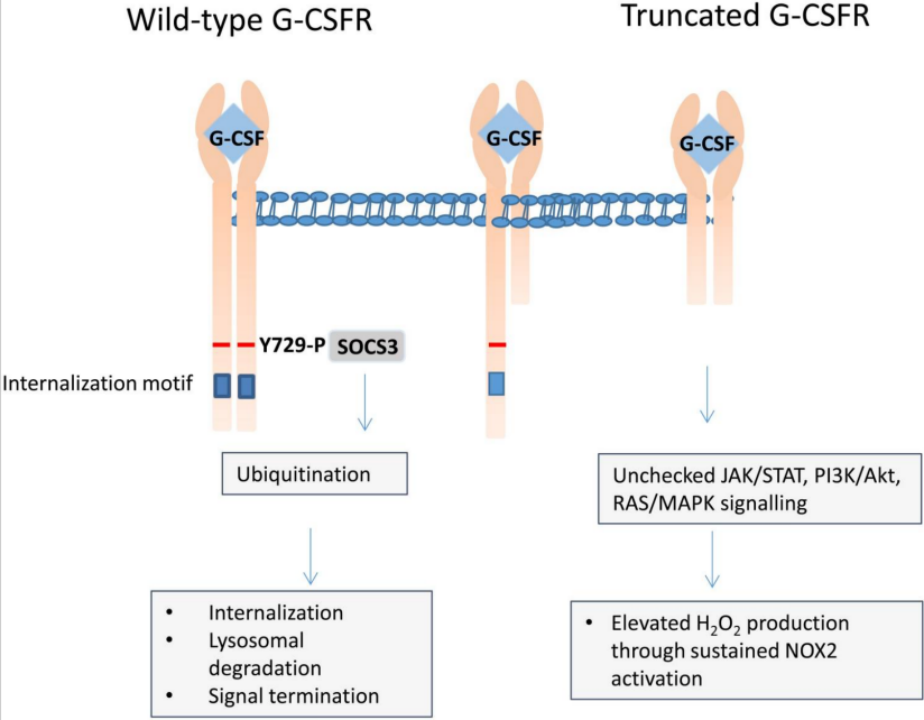
Pathogenic mutations in CSF3R constitute a major driver of SCN progression to MDS/AML. Most leukemogenic variants occur in the cytoplasmic tail, truncating the receptor protein by approximately 100 amino acids.
Structural truncation leads to two critical defects:
- Truncated receptors lose normal endocytosis and degradation machinery, resulting in massive accumulation on the cell membrane;
- Failure to recruit the negative regulator SOCS3 abolishes signal termination. As a result, proliferative cascades including JAK-STAT and PI3K-Akt remain constitutively hyperactivated, delivering persistent pro-survival and pro-growth stimuli to hematopoietic cells.
Clinical data show that 70%–80% of SCN patients who develop AML/MDS carry CSF3R truncating mutations, compared to only 30%–35% of non-leukemic SCN patients. Secondary leukemia primarily consists of undifferentiated AML (M0), myeloblastic AML (M1) and myelomonocytic AML (M4) subtypes.
Preclinical Mouse Models for SCN Research
- Hax1-/- Knockout Mice Global deletion of the Hax1 gene; utilized to dissect detailed mitochondrial apoptotic mechanisms underlying neutropenia.
- CSF3R Truncation Mutant Mice Engineered with cytoplasmic tail truncating variants of Csf3r, recapitulating mild neutropenia; an essential model for investigating molecular drivers of SCN leukemic transformation to AML.
- ELANE Mutant Mice Myeloid-restricted knock-in of pathogenic ELANE variants (p.C151Y, p.G214R), recapitulating misfolded intracellular neutrophil elastase accumulation, ER stress (UPR) and arrested granulocyte differentiation.
VeloGene Biotechnology Accelerates SCN Gene Therapy R&D
Gene therapy brings promising therapeutic prospects for rare inherited hematopoietic disorders, yet preclinical mechanistic research and therapeutic efficacy validation fully rely on standardized, well-characterized animal models.
Powered by our proprietary TurboMice™ technology, VeloGene Biotechnology resolves two longstanding technical bottlenecks of traditional transgenic strain construction: prolonged breeding cycles and low success rates for complex multi-locus genetic modifications. The platform supports precise editing of nearly any target genomic locus and generates fully homozygous gene-edited mouse lines directly from embryonic stem cells in as little as 2 months, eliminating lengthy breeding and screening workflows.
VeloGene Biotechnology provides custom SCN mouse models including Hax1-/- knockout mice, CSF3R mutant mice and ELANE mutant mice. Academic and industrial investigators are welcome to contact our technical team for project consultations!