




What Is Hemophilia?
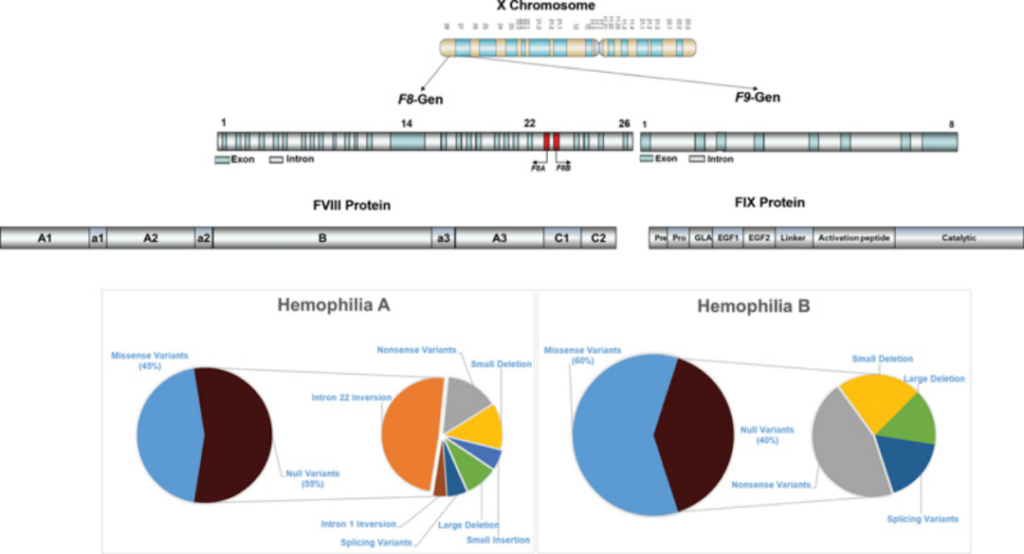
Hemophilia is an X-linked recessive hemorrhagic disorder triggered by pathogenic variants in the F8 gene (chromosomal locus Xq28) or F9 gene (Xq27). Such mutations impair synthesis and function of coagulation factor VIII (FVIII) or factor IX (FIX), resulting in spontaneous or post-traumatic bleeding due to defective thrombin generation. The global prevalence is approximately 17.1 cases per 100,000 males.
- Hemophilia A (HA, FVIII deficiency) accounts for 80%–85% of all cases;
- Hemophilia B (HB, FIX deficiency) accounts for 15%–20% of all cases.
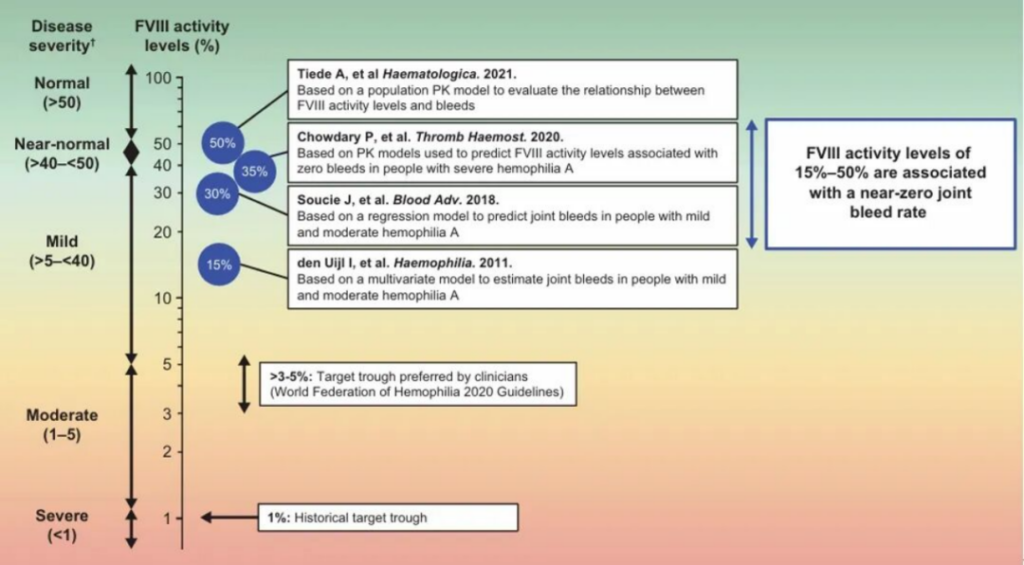
Based on plasma factor activity (FVIII:C / FIX:C), patients are classified into three severity grades:
- Severe: <1 IU/dL
- Moderate: 1–5 IU/dL
- Mild: 5–40 IU/dL
Pathogenesis
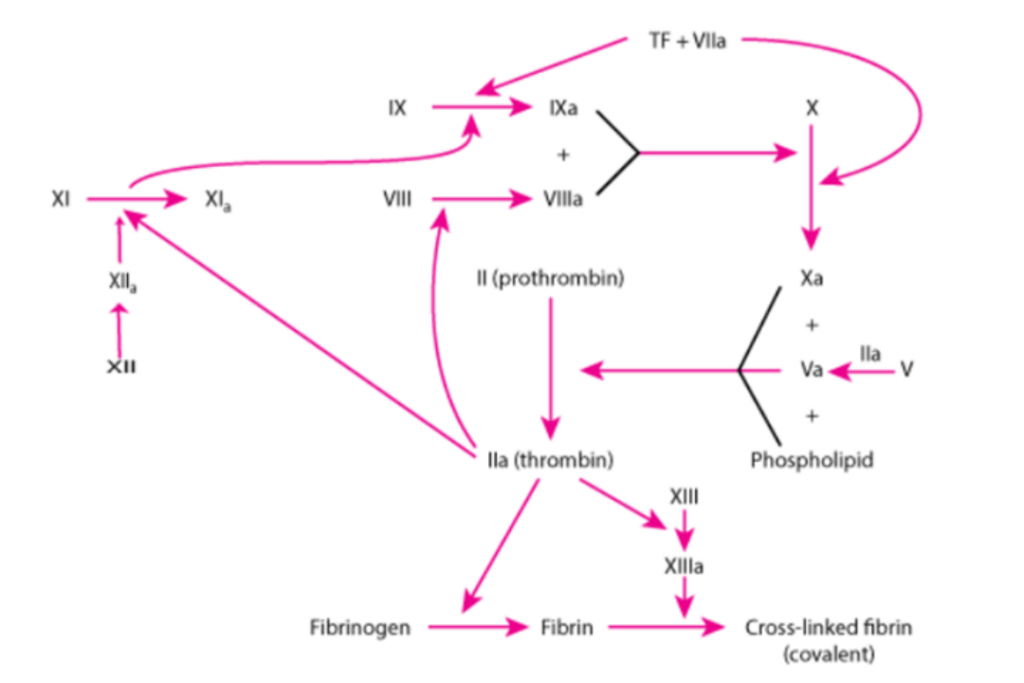
The core pathological defect of hemophilia lies in disrupted intrinsic coagulation cascade at the thrombin burst stage. Under physiological hemostasis, activated FIXa forms the intrinsic tenase complex together with its cofactor FVIIIa, calcium ions and platelet phospholipid surfaces. This complex efficiently converts FX into FXa, enabling assembly of the prothrombinase complex and explosive thrombin production, which ultimately generates stable cross-linked fibrin clots.
Hemophilia A
Hemophilia A arises from mutations or deletions of the F8 gene, leading to FVIII deficiency. FVIII is a 330 kDa glycoprotein predominantly synthesized by hepatocytes. During coagulation, FVIII acts as a cofactor for FIXa and activates FX in the presence of calcium and phospholipids. Reduced FVIII activity delays thrombin and fibrin formation, causing prolonged bleeding.
Hemophilia B
Hemophilia B is caused by loss-of-function F9 mutations. FIX is a 56 kDa vitamin K-dependent serine protease produced in the liver. It interacts with calcium, membrane phospholipids and FVIII to activate FX. FIX deficiency blocks the intrinsic pathway and markedly prolongs activated partial thromboplastin time (aPTT).
Normal hemostasis requires factor levels above 30% of the reference range. Patients with hemophilia exhibit prolonged clotting time due to insufficient tenase complex formation. Spontaneous joint and muscle bleeding occurs when factor activity drops below 1%.
Gene Therapy Strategies
1. rAAV Vector Therapy
Recombinant adeno-associated viral vectors (e.g., serotype 5) deliver truncated B-domain-deleted F8 or hyperactive Padua variant F9 to hepatocytes to achieve sustained long-term factor expression.
- Etranacogene dezaparvovec (Hemgenix®): approved for Hemophilia B;
- Valoctocogene roxaparvovec (Roctavian™): approved for Hemophilia A.
Clinical data confirm sustained elevation of factor activity, drastically reduced annualized bleeding rate (ABR), and freedom from routine prophylaxis for most recipients.
2. LNP-mRNA Delivery
Lipid nanoparticle encapsulated mRNA enables transient high-level FVIII/FIX expression, suitable for perioperative hemostasis management or bridging immune modulation therapy.
Preclinical Mouse Models for Hemophilia Research
- F8 Knockout Mice Exon 17 deletion abolishes FVIII expression, presenting prolonged clotting time and spontaneous internal bleeding; ideal for evaluating therapeutic candidates targeting FVIII replacement.
- F9 Knockout Mice Complete FIX loss, with milder bleeding phenotypes compared to F8 KO strains.
- F11 Knockout Mice FXI-deficient line displaying far milder hemorrhagic manifestations than HA/HB models.
- R333Q-hFIX Knock-In Mice Human F9 R333Q missense variant knocked in; expresses antigen-positive but catalytically inactive FIX (CRM⁺), applied for low-inhibitor immune phenotype research.
- R29X-hFIX Knock-In Mice Nonsense R29X variant leads to full absence of FIX protein (CRM⁻), serving as critical model for safety assessment of therapies targeting high-risk hemophilia genotypes.
VeloGene Biotechnology Accelerates Rare Disease Gene Therapy R&D
Gene therapy delivers promising therapeutic prospects for rare inherited bleeding disorders, yet preclinical mechanism study and therapeutic efficacy validation rely heavily on standardized, well-characterized animal models.
Powered by our proprietary TurboMice™ technology, VeloGene Biotechnology overcomes two long-standing technical bottlenecks of traditional transgenic strain construction: lengthy breeding cycles and low success rates for complex multi-locus genetic modifications. The platform supports precise editing of nearly any target genomic locus and generates fully homozygous gene-edited mouse lines directly from embryonic stem cells in as little as 2 months.
VeloGene Biotechnology provides custom hemophilia mouse models tailored to experimental demands, including F8 KO mice, F9 KO mice, F11 KO mice, R333Q-hFIX knock-in mice and R29X-hFIX knock-in mice. Academic and industrial researchers are welcome to contact our technical team for project consultations!
References
[1] Pezeshkpoor B, Oldenburg J, Pavlova A. Insights into the Molecular Genetic of Hemophilia A and Hemophilia B: The Relevance of Genetic Testing in Routine Clinical Practice. Hamostaseologie. 2022;42(6):390-399. DOI:10.1055/a-1945-9429. PMID:36549291; PMCID:PMC9779947
[2] Merck Manual of Diagnosis and Therapy
[3] Nathwani AC. Gene therapy for hemophilia. Hematology Am Soc Hematol Educ Program. 2019;2019(1):1-8. DOI:10.1182/hematology.2019000007. PMID:31808868; PMCID:PMC6913446
[4] Li J, Yan ZY. Advances in construction and research of hemophilia mouse models. Chin J Comp Med. 2019;29(6):141-146.
[5] Sabatino DE, Nichols TC, Merricks E, et al. Animal models of hemophilia. Prog Mol Biol Transl Sci. 2012;105:151-209. DOI:10.1016/B978-0-12-394596-9.00006-8. PMID:22137432; PMCID:PMC3713797