




What Is Rett Syndrome?
Rett Syndrome (RTT) is a severe neurodevelopmental disorder caused by loss-of-function variants in the MECP2 gene located on the X chromosome, predominantly affecting female patients. Clinical manifestations typically emerge between 6 and 18 months of age after an initial period of seemingly normal early development, followed by progressive developmental regression. Core symptoms include loss of language and hand motor function, stereotyped hand movements, gait abnormalities, irregular breathing (apnea and hyperventilation), scoliosis, anxiety and sleep disturbances. The incidence of RTT ranges from 1 in 10,000 to 1 in 15,000 live births.
Pathogenesis
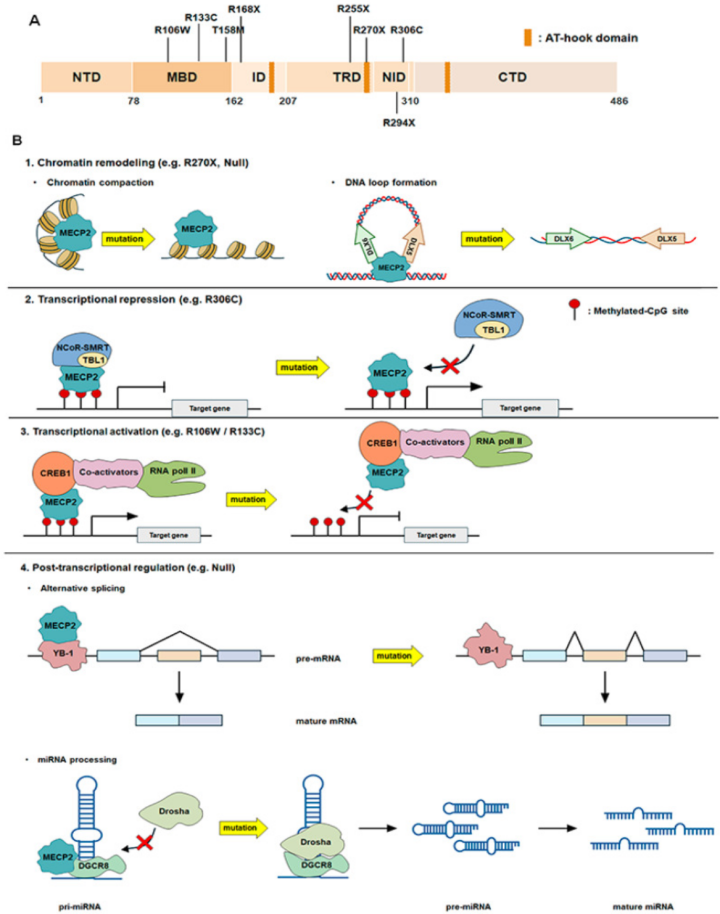
The core etiology of RTT stems from loss-of-function mutations in MECP2. The gene encodes methyl-CpG-binding protein 2 (MeCP2), a master epigenetic regulator that controls the expression of thousands of downstream genes by recognizing methylated DNA motifs.
- MeCP2 recruits histone deacetylases and co-repressor complexes to condense chromatin and suppress gene transcription;
- It also interacts with transcriptional co-activators to directly upregulate target genes, such as brain-derived neurotrophic factor (BDNF).
During neural development, MeCP2 acts as a critical master switch governing neuronal maturation, dendritic spine morphology, synaptic plasticity and the excitatory-inhibitory balance of neural circuits. Loss of functional MeCP2 triggers genome-wide transcriptional dysregulation, impairs synaptic formation and function, and particularly disrupts GABAergic inhibitory neurons, ultimately inducing widespread dysfunction of cerebral neural networks and giving rise to classic RTT manifestations including developmental regression, motor impairment, epilepsy and autonomic breathing disorders.
Common pathogenic MECP2 variants cluster at well-defined mutational hotspots:
- Nonsense mutations: p.Arg168X, p.Arg255X, p.Arg270X, p.Arg294X
- Missense mutations: p.Thr158Met (T158M), p.Arg106Trp (R106W), p.Arg133Cys (R133C), p.Arg306Cys (R306C)
Atypical Rett Syndrome can also be driven by mutations in CDKL5 and FOXG1, two genes functionally linked to the MeCP2 regulatory network:
- CDKL5 kinase modulates MeCP2 activity via phosphorylation to indirectly regulate neuronal function;
- FOXG1 transcription factor shares overlapping signaling pathways with MeCP2 during forebrain development. Variants in both genes interfere with shared downstream molecular cascades and produce neurodevelopmental phenotypes resembling classic RTT.
Gene Therapy Strategies
- AAV-Mediated Gene Therapy In March 2025, the first regional Rett syndrome gene therapy in South Central China was completed at Guangzhou Women and Children’s Medical Center. Functional wild-type MECP2 transgenes are delivered via AAV vectors directly to damaged brain neurons to restore cellular function and alleviate neurodevelopmental impairments.
- A-to-I RNA Editing This technology converts the R270X nonsense termination mutation to a tryptophan codon to recover full-length functional MeCP2 protein. Preclinical mouse studies demonstrated robust therapeutic efficacy without overt behavioral abnormalities.
- Neurotrophic Factor Replacement Therapy Transgenic neurotrophic factor (TF) overexpression ameliorates RTT-associated symptoms. The TF coding sequence is packaged into AAV-PHP.eB, a serotype capable of efficient blood-brain barrier (BBB) penetration in rodents, under an astrocyte-specific promoter. Low-dose AAV-TF treatment significantly improves motor performance in Mecp2 knockout mice.
Preclinical Mouse Models for RTT Research
- Mecp2-/- Knockout Mice Complete ablation of the murine Mecp2 gene recapitulates the full pathological spectrum of human RTT, presenting neurological deficits including motor dysfunction, abnormal respiration and shortened lifespan.
- Mecp2 T158A Knock-In Mice Carry the p.Thr158A variant that specifically abolishes MeCP2 DNA-binding capacity, used to dissect phenotypic outcomes driven by disrupted DNA interaction.
- Mecp2 R306C Knock-In Mice Harbor the p.Arg306Cys mutation that impairs recruitment of transcriptional repressor complexes, ideal for investigating dysregulated transcriptional suppression pathways.
- Viaat-Cre; Mecp2 Conditional Knockout Mice Mecp2 is selectively deleted in GABAergic neurons to isolate the specific contributions of inhibitory neuronal dysfunction to RTT pathogenesis.
VeloGene Biotechnology Empowers RTT Gene Therapy Development
Gene therapy brings promising therapeutic prospects for rare diseases, yet preclinical mechanism research and therapeutic efficacy validation are fully dependent on standardized animal models.
Leveraging our proprietary TurboMice™ technology, VeloGene Biotechnology has developed a broad portfolio of rare disease gene-edited mouse models. TurboMice™ addresses two longstanding limitations of traditional strain construction: lengthy breeding cycles and low success rates for complex multi-locus gene edits. The platform enables precise modification of nearly any genomic target and generates fully homozygous gene-edited mouse lines directly from embryonic stem cells in as little as 2 months.
VeloGene Biotechnology provides custom Rett syndrome mouse models tailored to experimental needs, including Mecp2-/- knockout mice, T158A knock-in mice, R306C knock-in mice, and Viaat-Cre conditional knockout lines. Academic and industrial researchers are welcome to contact our technical team for project consultations!