



What Is Neuromyelitis Optica Spectrum Disorder?
Neuromyelitis Optica Spectrum Disorder (NMOSD) is a rare autoimmune disease targeting the central nervous system (CNS). Its hallmark clinical manifestations include recurrent optic neuritis and longitudinally extensive transverse myelitis, which frequently lead to severe vision loss, motor dysfunction and sensory impairment.
Recent epidemiological data report an overall prevalence of approximately 1.82 per 100,000 individuals. The incidence is markedly higher in Asian and African populations than in Caucasians, with a striking female predominance at a female-to-male ratio of roughly 10:1.
Pathogenesis
The core pathogenic driver of NMOSD is autoantibodies targeting aquaporin-4 (AQP4).
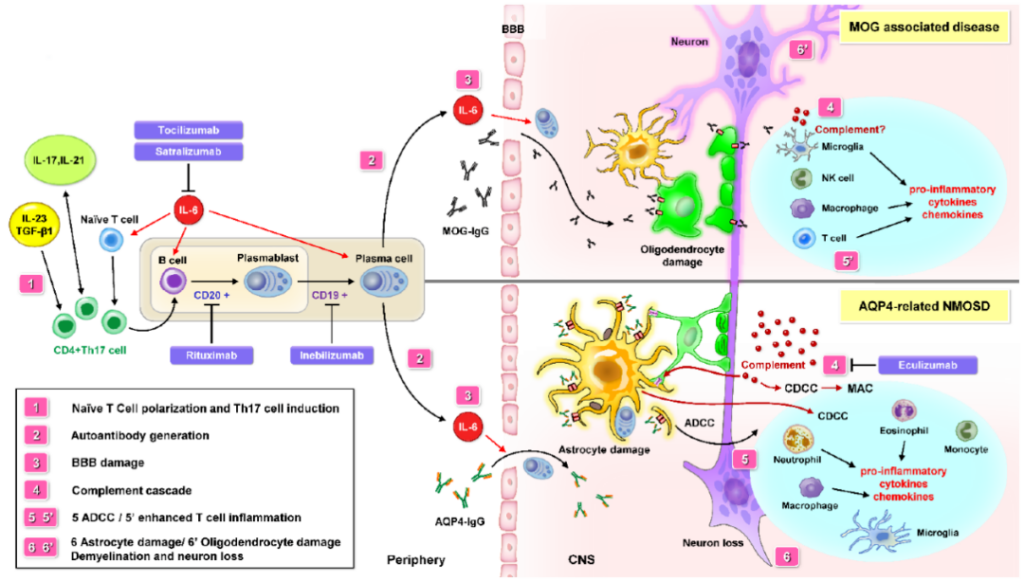
Dysregulated peripheral autoimmunity drives Th17 cell differentiation, triggering secretion of pro-inflammatory cytokines including interleukin-17A (IL-17A) and interferon-γ (IFN-γ). These cytokines further stimulate B cell maturation into plasma cells, which produce elevated levels of AQP4-IgG and myelin oligodendrocyte glycoprotein-IgG (MOG-IgG) autoantibodies. These autoantibodies cross the blood-brain barrier (BBB) and infiltrate the central nervous system.
- AQP4-IgG binds to AQP4 expressed on astrocyte membranes, activating the complement cascade to initiate complement-dependent cytotoxicity (CDC) and antibody-dependent cellular cytotoxicity (ADCC). This cascade results in astrocyte injury and demyelination.
- MOG-IgG binds to myelin oligodendrocyte glycoprotein (MOG), triggering complement activation, massive inflammatory cell infiltration and neural tissue damage, ultimately leading to axonal degeneration and permanent neurological deficits.
Gene Therapy Research Progress
1. CAR-T Cell Therapy
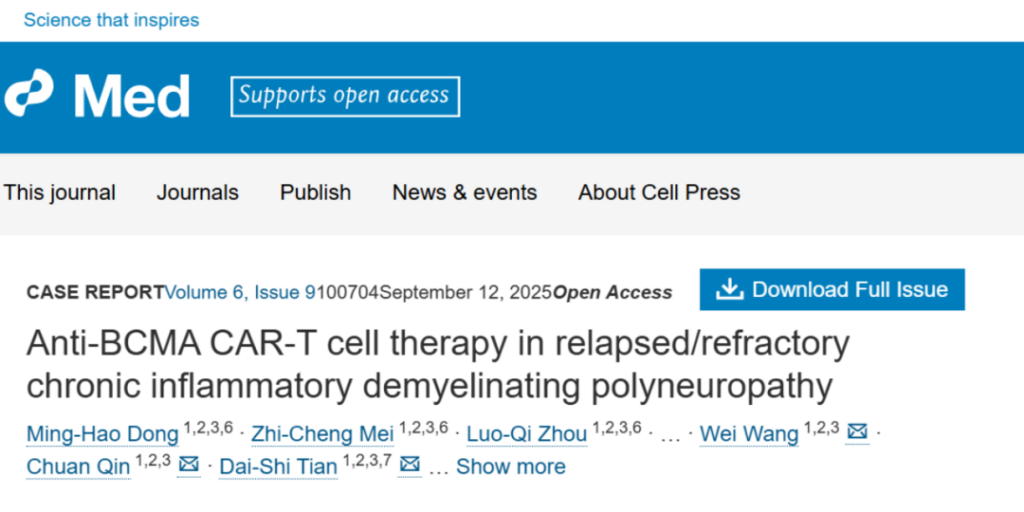
In 2023, Professor Wei Wang’s research team at Huazhong University of Science and Technology launched a clinical trial evaluating CAR-T cell therapy for AQP4-IgG-seropositive NMOSD patients. Clinical data demonstrated controllable safety profiles and promising therapeutic efficacy for patients with relapsing and refractory AQP4-IgG-positive NMOSD.
2. Gene Editing Technology
Genetic modification of immune cells is designed to restore antigen-specific immune tolerance. Though still in preclinical research stages, this strategy shows great potential for modulating autoimmune signaling pathways and re-establishing immune homeostasis.
Preclinical Mouse Models for NMOSD Research
1. Human AQP4 Transgenic Mice (hAQP4 Mice)
This strain stably expresses human AQP4 protein and serves as a gold-standard model for recapitulating NMOSD pathological progression. Passive transfer of AQP4-IgG combined with human complement successfully recapitulates core disease phenotypes, including astrocyte damage, robust neuroinflammation and widespread demyelination within the CNS.
2. AQP4 Knockout Mice
Global ablation of the murine Aqp4 gene eliminates endogenous AQP4 protein expression. This model is widely applied to dissect physiological and pathological functions of AQP4, and acts as a critical negative control to verify the target specificity of AQP4-IgG-mediated pathogenicity.
VeloGene Biotechnology Accelerates Rare Disease Gene Therapy R&D
Gene therapy brings transformative therapeutic prospects for rare diseases, yet its preclinical development and efficacy validation fully rely on standardized animal models.
Powered by our proprietary TurboMice™ technology, VeloGene Biotechnology has developed a comprehensive portfolio of rare disease gene-edited mouse models. TurboMice™ resolves two long-standing technical bottlenecks of traditional model generation: prolonged breeding cycles and low success rates for complex genetically modified strains. The platform supports precise editing of nearly any target genomic locus and generates fully homozygous gene-edited mouse lines directly from embryonic stem cells in as little as 2 months.
VeloGene Biotechnology provides custom NMOSD mouse models tailored to individual research requirements, including hAQP4 transgenic mice and AQP4 knockout mice. Academic and industrial researchers are welcome to contact our technical team for project inquiries!
References
[1] Jia LL, Jiang YS, Zhang MG, Ma WF, Zhang T, Li W. Research advances in the pathogenesis of neuromyelitis optica spectrum disorders. J Pract Clin Med. 2022, 26(7): 132-138. DOI: 10.7619/jcmp.20215000
[2] Huang TL, Wang JK, Chang PY, Hsu YR, Lin CH, Lin KH, Tsai RK. Neuromyelitis Optica Spectrum Disorder: From Basic Research to Clinical Perspectives. Int J Mol Sci. 2022, 23:7908. https://doi.org/10.3390/ijms23147908
[3] Pittock SJ, Zekeridou A, Weinshenker BG. Hope for patients with neuromyelitis optica spectrum disorders — from mechanisms to trials. Nat Rev Neurol. 2021, 17:759–773. https://doi.org/10.1038/s41582-021-00568-8
[4] Xu L, Xu H, Tang C. Aquaporin-4-IgG-seropositive neuromyelitis optica spectrum disorders: progress of experimental models based on disease pathogenesis. Neural Regen Res. 2025, 20(2):354-365. doi: 10.4103/NRR.NRR-D-23-01325. PMID: 38819039; PMCID: PMC11317952
[5] Correale J, Carnero Contentti E. Induction of immune tolerance in NMOSD and MOGAD. Ther Adv Neurol Disord. 2025, 18:17562864251357393. doi: 10.1177/17562864251357393. PMID: 40761287; PMCID: PMC12319201
Previous Article: Rare Diseases Focus | Issue 13: Fabry Disease
Next Article: Rare Diseases Focus | Issue 15: Glycogen Storage Disease (Type I, II)