
The Next Generation of Mouse Model Preparation Platform
- 4-Week Delivery: World’s fastest custom mouse model development.
- TurboMice™ Tech: Proprietary high-efficiency gene-editing platform.
- Full Capabilities: Expert conditional knockouts, knock-ins, and humanized models.
- Validated Quality: Guaranteed high precision and model viability.


LaminA Mouse Model
| Starin Name | C57BL/6J‑Lmna<sup>tm1(G609G)</sup> |
|---|---|
| Strain Background | C57BL/6J |
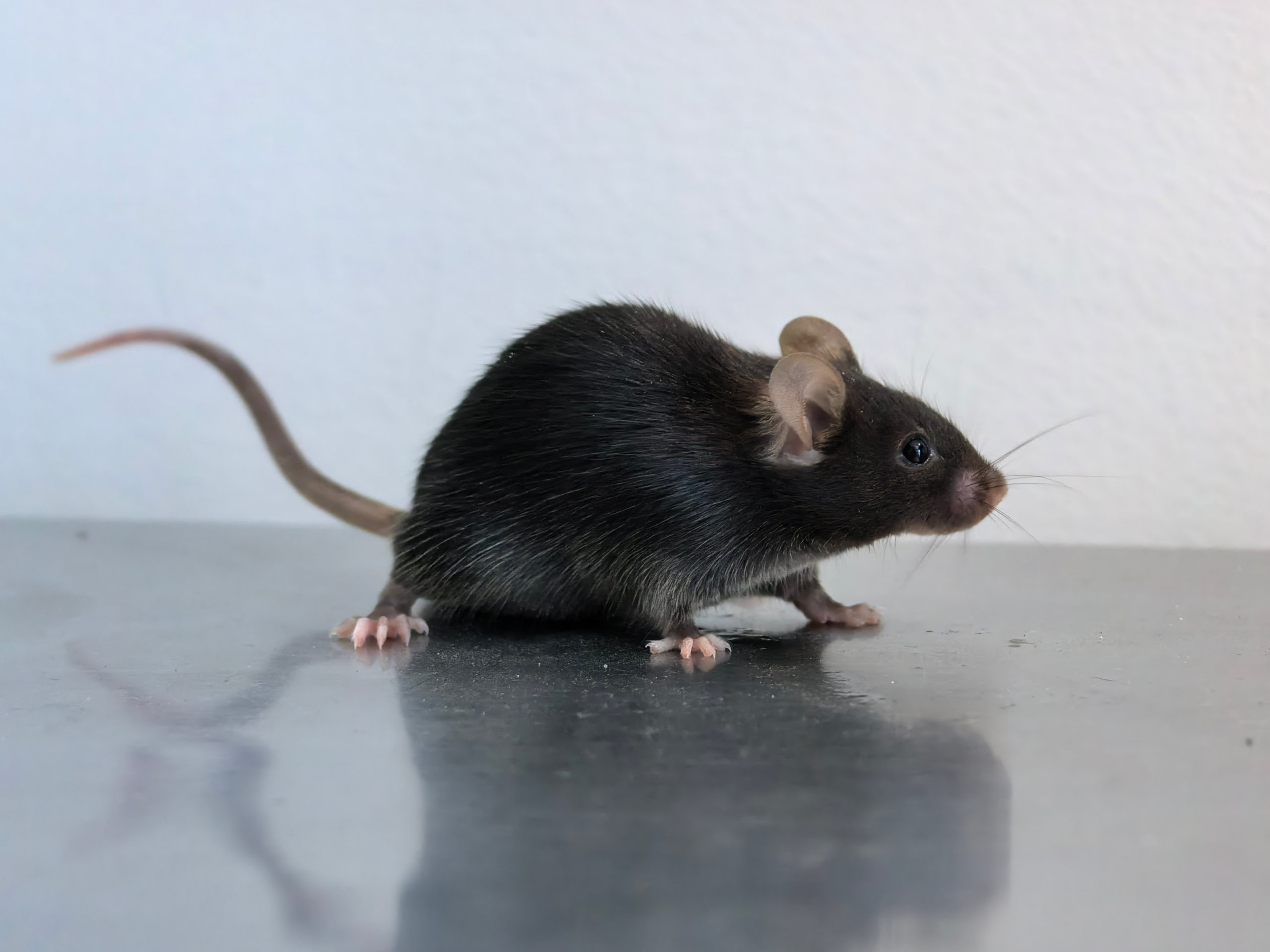
- Aging & Senescence Mechanism Research: Investigating nuclear lamina dysfunction, DNA damage accumulation, telomere attrition, and senescence‑associated secretory phenotype (SASP) in accelerated aging.
- Age‑Related Cardiovascular & Metabolic Disease: Modeling vascular calcification/stiffness, lipodystrophy, dyslipidemia, and cardiomyopathy associated with laminopathies.
- Geroprotective & Anti‑Aging Drug Screening: Preclinical evaluation of farnesyltransferase inhibitors (FTIs), splicing modulators (e.g., morpholino antisense oligos), senolytics, and antioxidant therapies targeting progerin‑induced pathology.
- Musculoskeletal & Dermal Aging: Studying osteoporosis, sarcopenia, dermal thinning, and alopecia mechanisms in the context of nuclear envelope defects.
- Biomarker Validation: Quantifying senescence markers (e.g., SA‑β‑Gal in hippocampus/brain, p16INK4a, γ‑H2AX foci) in a physiologically relevant premature‑aging background.
Lamin A Premature Aging (LMNAG609G) Knock-in Mouse Model — C57BL/6J‑Lmnatm1(G609G)/MCL
This model carries a homozygous or heterozygous LMNA G608G(mouse G609G, equivalent to human LMNAc.1824C>T, p.Gly606Gly which activates a cryptic splice site causing Δ50/progerin expression) point mutation on the C57BL/6J background. It recapitulates the classic Hutchinson‑Gilford Progeria Syndrome (HGPS) phenotype—including growth retardation, alopecia, osteoporosis, lipodystrophy, vascular stiffening, and markedly shortened lifespan (~100 days in homozygotes)—providing a well‑established in vivoplatform for aging research and geroprotective drug screening.
- Clinically Relevant LMNA Mutation: Harbors the canonical LmnaG609G (human LMNAG608G/progerin‑inducing) point mutation that activates a cryptic splice site → expression of truncated prelamin A (progerin), faithfully mimicking human HGPS molecular pathogenesis.
- Robust Progeroid Phenotype: Homozygotes display overt premature‑aging signs—alopecia, dwarfism, osteolysis, subcutaneous fat loss, vascular sclerosis, organ fibrosis, chronic low‑grade inflammation—with accelerated mortality (median ~100 d).
- Short Lifecycle & Clear Readouts: Rapid disease onset post‑puberty enables time‑/cost‑efficient drug efficacy studies; phenotype penetrance is high and uniform across littermates.
- Defined Genetic Background: Established on C57BL/6J inbred background ensuring genetic homogeneity and compatibility with standard aged‑mouse cohorts and transgenic crosses.

FAQ
Game-changing benefits?
While competitors highlight germline efficiency gains, shorter timelines and enhanced 3Rs animal welfare benefits for their technologies, these are merely incremental improvements over traditional approaches. In sharp contrast, our proprietary technology delivers fully pure, homogeneous lineages—every single cell of the mice is derived exclusively from totipotent ES cells, with guaranteed 100% germline transmission efficiency. To experience these unparalleled benefits firsthand, enquire about your custom mouse model project with us or order embryos for in-house validation at your facility.
How much for a project assessment?
•Free initial design proposal with zero obligations.
•Request a free quote!
Who owns the mouse lP? Do l need a licence from Mingceler?
All model generation projects of Mingceler operate under a fee-for-service framework.
IP Ownership: All intellectual property rights related to custom mouse models, including derived organs, tissues, cells, and biological materials, are the sole and exclusive property of the Client.
Third-Party Transfer Permission: The Client may independently decide to retain, utilize, or commercialize their custom models project materials (e.g., targeting vectors, ES cells, mouse lines) without the need for prior consent from Mingceler.
Licensing Exemption: The Client has full autonomy over all uses of the custom models or their derivatives, including but not limited to commercialization, distribution to third parties, and publication involving model data. No written license from Mingceler is required for such uses.